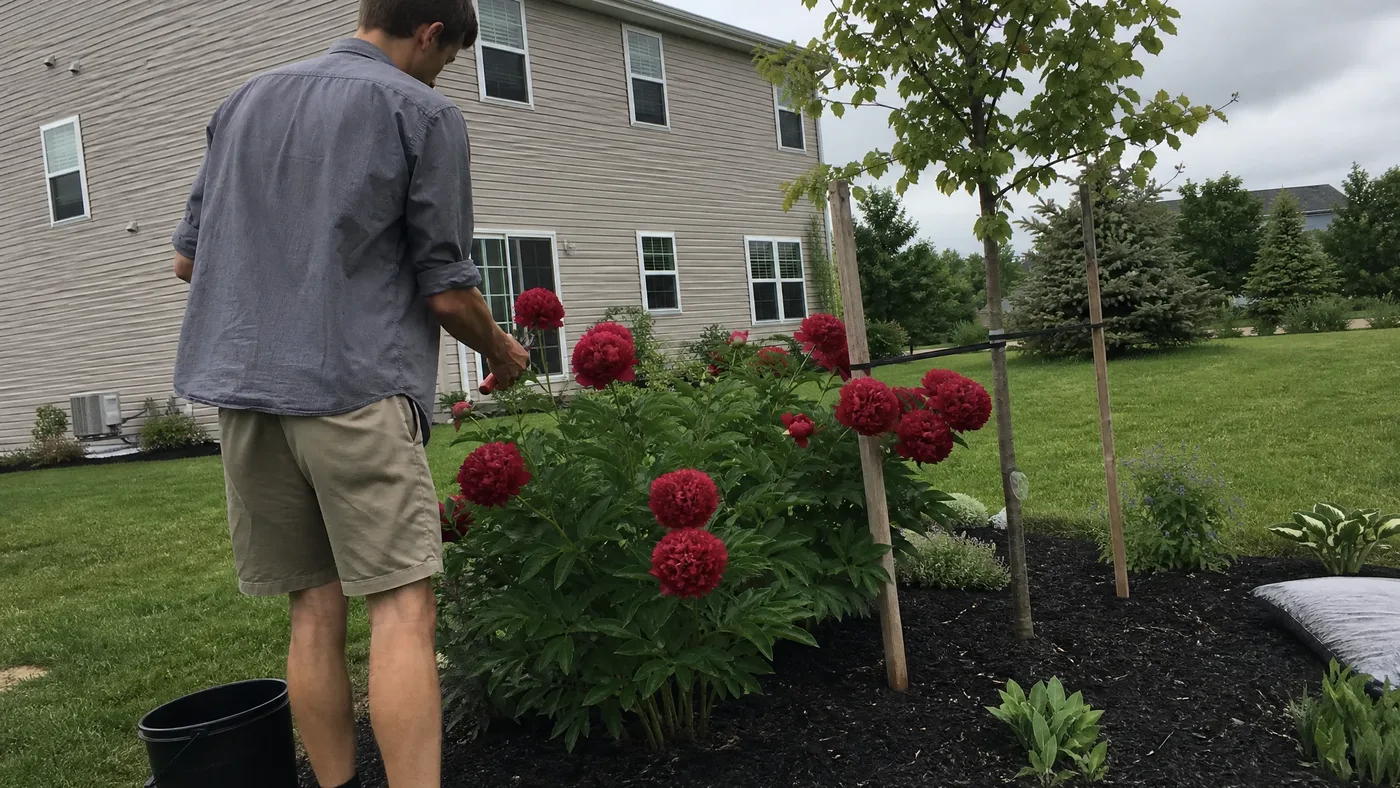
Cutting Kansas Peony for Bouquets: Stage, Stems and Vase Life
A peony bud in late spring is a sealed packet of sugar and water, and what you do in the first minute after cutting decides everything that follows. The petals are folded tight inside, fed by a stem you have just severed. A bud cut at the wrong moment either never opens or opens thin and brief.
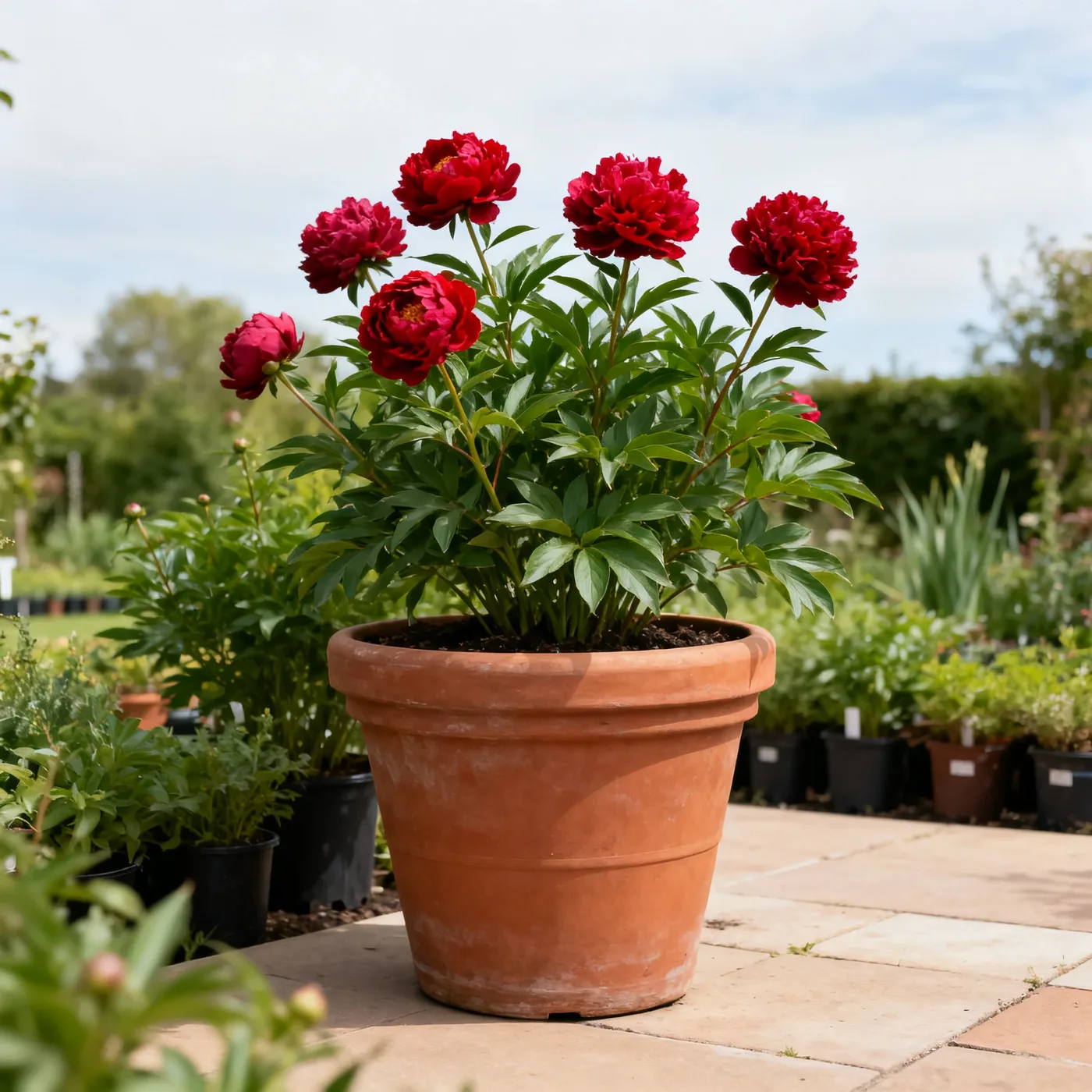
Kansas is worth getting this right. It is a fragrant double with a bright clear red flower, and a settled clump can fill vases for decades, but only if your cutting leaves the plant able to feed itself. Read on for how to judge the bud, make the cut, condition the stems, store buds you hold back and decide how many stems to take.
Why the Bud Stage Decides Everything for Kansas Peony
A cut stem can no longer draw sugar from the rest of the plant, so the bud has to open on whatever it already holds plus the water you give it. Cut too early, while the bud is hard and green, and there is not enough stored inside to finish the job. Cut too late, and the flower has already spent its reserves opening on the plant, which leaves you a short vase life.
The right moment sits between those two. Iowa State Extension advises cutting peonies in bud, before the flowers open, and that is the rule we follow with Kansas too.
Kansas is double, bright clear red that fades very little. So you are not racing to save the color, a point people often mix up. You cut early for vase life and for a flower that opens clean and full, not to rescue the shade.
Reading Kansas Peony Buds for Softness
Two signs tell you a bud is ready. The first is color: the green outer covering (the sepals) loosens enough that a thin line of red shows where the petals meet. The second is feel. The best harvest stage is buds that are showing color and soft in the center, and a gentle squeeze is how you check it.
Cup the bud in your fingers and press very lightly, the way you would test a marshmallow. A hard bud pushes back like a green marble. A ready bud gives under your thumb. Never pinch, because a bruised bud will not open evenly.
This table sorts what you will feel on a Kansas clump.
| What you see and feel | What it means | What to do |
|---|---|---|
| Hard, green, no red showing | Too early, reserves are thin | Leave it and check again in a day or two |
| Slight give, red at the seam | Ready | Cut now |
| Soft all over, sepals peeling back | Late | Cut and use quickly, or let it open outside |
The buds on one clump rarely ripen on the same day, so once they swell, walk the plant every day or two. Some advice says to wait for a half-open flower so you can see the color. For Kansas, which holds its color so well, we would not wait.
Making the Cut Without Hurting the Clump
Cut in the cool part of the day, when stems are full of water, and carry a bucket of cool water into the garden with you. The stem should go into water within seconds of the cut, which is the first-minute rule from the top of this guide. Use sharp, clean shears. Kansas is a skin irritant, so wear gloves.
Where you cut matters more than most people expect. Kansas stands about 20 to 39 inches tall, and the temptation is to cut at the base for the longest stem. One of the most common questions we get is whether a low cut hurts the plant. It does, because the leaves are the plant's food factory.
So cut just above a set of leaves and leave the lower leaves on the stem you keep. You lose a little vase length and the clump keeps most of its solar panels. Choose buds from the outside of the clump first, where the cut opens space for the stems left behind.
Conditioning Kansas Peony Stems in Cool Water
Conditioning means preparing a cut stem to drink well before it goes into an arrangement. Peony stems are thick and hold a lot of water, but a fresh wound can seal with air or bacteria faster than you would think. Work through these steps soon after cutting.
- Strip the lower leaves. Any leaf that sits under water rots and feeds bacteria that clog the stem, so remove everything that would be submerged and keep the upper leaves.
- Recut the stem. Trim the bottom with a sharp blade or shears so the stem can pull water through a fresh opening, not a sealed one.
- Give a long drink. Stand the stems in a clean bucket of cool water in a shaded spot for several hours before arranging. If you use cut-flower food, follow the label.
- Arrange last. Use a clean vase, because bacteria left from earlier bouquets shorten the life of a new one.
Kansas carries a heavy double head on a long stem, so choose a vase tall and weighty enough to hold it. Keep the finished bouquet out of direct sun and away from heat sources, which push buds open faster than the stem can support.
Cold Storage for Buds You Hold Back
Refrigeration lets you spread the bloom of a plant that otherwise flowers in a rush. Moist refrigeration keeps peony buds fresh for several weeks. The reasoning is simple: cold slows the bud's use of its sugar reserves, so it waits until you are ready.
Packing the Buds
Cut buds at the same soft, color-showing stage, strip the leaves and wrap the stems loosely in damp paper. Lay them on their sides in a bag or box and put them in the refrigerator. Keep the heads dry, because water sitting on the buds invites mold.
Bringing Them Out
Recut the stems, stand them in cool water and let them sit in a cool room first. Move them somewhere warmer only once they have taken a drink and the buds start to swell. Opening takes time, so do not rush it with heat.
The source says several weeks, not a number, so test a few stems before you trust the long end of that range with a wedding or party.
How Long Kansas Peony Doubles Last in Water
We cannot give you an honest day count, because no source we trust measures it for Kansas, and the answer shifts with bud stage, room temperature and how well you conditioned. Plan on days, not weeks, once the flower is fully open. That matches the plant itself: each plant blooms for about two weeks in the garden.
In our rows, stems cut at the soft stage open over a day or two in the vase, while tight ones sit and sulk. You can stretch the display by cutting a few buds each day and by holding some in the refrigerator. Our guide to Kansas peony bloom time shows how that window fits your season.
To keep an open bouquet going, recut the stems and refresh the water every day or two, and keep the vase cool at night. Expect petals to drop as the flowers age. The color should hold, since Kansas fades very little, but the petals will still go.
How Many Stems a Mature Kansas Peony Spares
Start by waiting. Kansas takes 2 to 5 years to reach maturity, and a young clump needs every leaf it has to build roots. In the first seasons after planting, we say leave the buds alone or take only a stem or two, and let the plant settle.
For a mature clump, no source gives a stem count, and clumps vary with age, sun and soil, so we will not invent one. Our rule is proportion: take a minority of the stems and leave the majority standing with their foliage. If you want a firm number for your region, check with your local extension service. Our guide to Kansas peony size helps you judge how big your own clump has grown.
Spread your cutting across the roughly two-week bloom period instead of taking everything on one day. Remove spent flowers on the stems you leave, so the plant does not spend energy on seed.
Leaves Left Behind Feed Next Year
Here is the cause and effect behind every rule above. After flowering, the leaves keep making sugar from sunlight and send it down into the roots. The roots store it, and that stored sugar builds next spring's growth, including the buds at the top of the crown that will become next year's flowers. Cut the leaves away and you cut off next year's supply.
We often see clumps cut hard in their young years skip flowering the next spring. The plant is not dead. It simply ran out of stored food.
Keep the leaves healthy through summer. Powdery mildew can affect many cultivars, so remove and destroy diseased leaves. Our fertilizing guide covers feeding the clump after bloom. Leave the foliage standing until it dies down, then follow our pruning guide to cut it back in autumn.
Cut Lightly Now and Fill the Vase Again
Cut Kansas when the bud shows color and gives under a gentle squeeze, put the stem in cool water at once and let it drink before you arrange it. Buds you hold back keep in moist refrigeration for several weeks. Once open, expect days of vase life, with the red holding well.
Take only a minority of the stems and leave the foliage in place. Modest cutting today means the same clump gives you a full vase again next year.
Kansas Peony
Nursery-grown Kansas Peony in sizes from #2, shipped to your door.
From $74.60
Shop Now →Our Kansas Peony clumps are raised in beds of rich, deep soil that drains freely and gets sun from morning into evening, which is how we get stems worth cutting. Every plant we sell was grown by us, since the same small crew tends every bed from planting to packing, top-quality perennials from start to finish. If you would like a clump that keeps your vase full season after season, begin with a Kansas from our shop.