Buying Kansas Peony: What to Look for Before You Order
Buying a peony plant is an investment in a garden that will outlast you. Kansas Peony (Paeonia lactiflora 'Kansas'), with its deep red double blooms and proven 50+ year lifespan, is worth getting right from the start. Whether you're purchasing bare root divisions or established plants in containers, knowing what to look for will help you bring home a plant that establishes quickly and blooms reliably for decades.
Understanding Kansas Peony Basics
Before you shop for kansas peony for sale, it helps to know what you're actually buying. Kansas Peony is a herbaceous perennial that grows 24 to 30 inches tall and spreads 24 to 36 inches wide at maturity. It produces deep red to rose-red double blooms in late spring, typically in May, though timing shifts by 2 to 4 weeks depending on your USDA zone and local spring conditions.
The plant is hardy in zones 3 to 8, so confirm your zone before ordering. A Kansas Peony reaches full flowering potential in 3 to 4 years. Newly planted divisions may produce a few blooms in the first 1 to 2 years, but don't expect the full show immediately. This slower start is normal and not a sign of defect. Once established, a healthy plant blooms reliably for 50 or more years.
Quality Indicators for Kansas Peony Plants
What separates a vigorous plant from a weak one? Three core details: the root structure, the number of growing eyes (growth buds on the crown), and the plant's history.
Root quality: Bare root peonies should arrive with fibrous roots that are pale, cream-colored, or slightly pink. Healthy roots bend without snapping. Dried-out, shriveled, or soft, mushy roots indicate poor storage conditions and will slow establishment. Avoid plants with roots that smell foul or appear black. Division quality is equally important. A good peony division has 3 to 5 eyes. Divisions with fewer than 3 eyes start slowly; divisions with 5+ eyes are rare and premium.
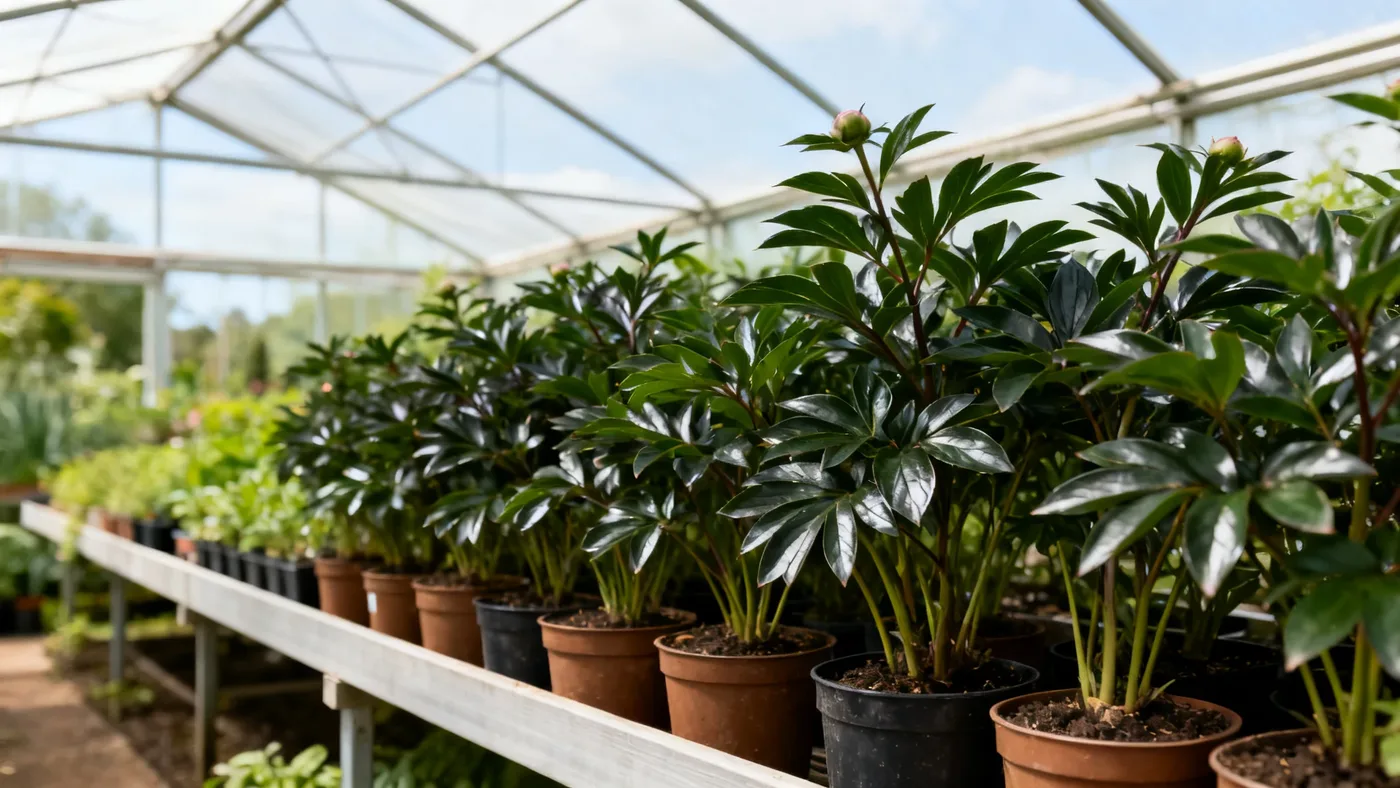
Plant size and age: Larger does not always mean better. A 2-year-old division with 4 solid eyes will outperform a scraggly 4-year-old clump with only 2 eyes. If buying container-grown peonies, look for plants that fill a #1 or #3 nursery container with dense green foliage and visible flower buds, not leggy stems in oversized soil. A well-grown container specimen shows vigor before it leaves the shelf.
Source history: Knowing the plant's background helps. A nursery-grown peony that has been in the ground for at least one season will have denser roots and establish faster than a freshly divided cutting. Ask the seller if the plant is field-grown or tissue-cultured. Tissue-cultured peonies have the advantage of being disease-screened.
Bare Root vs. Container-Grown: Which Should You Buy?
Each form has real advantages. Choose based on timing, budget, and your comfort level.
Bare root peonies are field-dug in fall (September through November) and shipped dormant. This is the preferred planting window. Fall bare root stock costs less than container-grown, ships lighter, and establishes its root system over winter and early spring before hot weather arrives. The tradeoff is that bare root requires careful handling and prompt planting. If you receive bare root stock, plant or heel it in within 1 to 2 weeks of arrival.
Container-grown peonies (usually in #1 or #3 pots) can be planted in spring or fall, though spring is most common when buying from retail garden centers. They arrive with soil already around the roots, so transplant shock is less severe. They are bulkier, more expensive to ship, and pricier overall, but they eliminate the urgency of bare root planting. If you buy kansas peony in spring from a local nursery, you see the plant's health directly before taking it home.
If purchasing kansas peony bare root in fall, you're working with dormant divisions and won't see foliage. Rely on root quality and eye count to judge vigor. If buying a spring container-grown plant, you can inspect the foliage, root emergence, and overall vigor with your own eyes.
Key Features to Compare When Shopping
Not all kansas peony nursery sources are equal. Here's what to examine before placing an order.
Eye count in writing: Confirm the number of eyes before ordering. Most specialty sellers list this clearly: "3-eye division," "4-eye division," etc. Avoid any listing that says "peony division" without specifying eye count. This detail matters enormously for first-year establishment and timing to full bloom.
Shipping and protective packing: Good nurseries wrap bare root peonies in moist sphagnum moss, peat, or sawdust to prevent drying. Roots should arrive cool and firm, not warm or dehydrated. When the package arrives, open it promptly and inspect. If the packing is bone-dry or the roots feel soft and mushy, document it with photos and contact the seller within 24 hours.
Plant health guarantees: Some specialty nurseries offer a guarantee period such as "if the plant doesn't leaf out within 60 days, we'll replace it" or "DOA (dead on arrival) replacements." This protects you if a plant arrives in poor condition. It's not universal, so ask specifically before buying. A seller willing to stand behind their product is worth the premium.
Cultivar confirmation: Confirm in writing that you're receiving 'Kansas' and not 'Karl Rosenfield' or another similar red double peony. These cultivars look nearly identical in the field and are sometimes mixed up. Always get written confirmation of the exact cultivar name.
Where to Buy Kansas Peony
Your options range from local to mail-order specialty sources.
Specialty peony nurseries: Growers who focus entirely on peonies know 'Kansas' intimately and publish clear availability windows for bare root (fall) and container plants (spring). They answer detailed questions, provide eye-count specs, and handle shipping with care. Most are mail-order only, but the distance is worth it for quality and reliability. Many have been in business for decades and have earned industry reputations worth trusting.
Regional and wholesale mail-order nurseries: Larger multi-product growers carry several peony cultivars, including 'Kansas'. They offer both bare root and container plants, often with competitive pricing due to volume. Shipping policies vary widely. Read the fine print about dormancy guarantees, return policies, and replacement timeframes before committing.
Local garden centers: Spring is peak season. Local centers carry containerized peonies in bloom or bud, which is wonderful for seeing exactly what you're buying. The downside is limited selection and higher retail prices than mail-order. However, avoiding shipping damage and getting hands-on inspection are real benefits. Visit in person, inspect root systems through drainage holes, and don't settle for leggy foliage or weak emergence.
Online plant marketplaces: Convenience is high; quality is variable. Read seller reviews carefully and check the return and guarantee policies. Avoid sellers who can't or won't specify eye count, root quality, or cultivar origin. Impulse purchases often lead to disappointment with peony stock.
Price Points and What to Expect
Peony pricing varies widely depending on source and plant age, so here's a realistic framework for buying peony plants.
Bare root divisions: Entry-level bare roots with 2 to 3 eyes typically cost the least. Mid-range divisions with 4 solid eyes cost more. Premium hand-selected divisions with 5+ eyes and extra-thick root systems command the highest price but establish faster and reach full bloom sooner. Bulk orders sometimes offer per-plant discounts if ordering multiple divisions for landscape projects.
Container-grown plants: A #1 container peony costs less than a #3. A larger, established container plant (2 to 3 years old in the pot) will be pricier than a freshly potted division but may reward you with earlier flowering and less transplant stress. Calculate the value: faster bloom and lower mortality risk can justify paying more upfront.
Disease-tested stock: Tissue-cultured or phytophthora-screened peonies command a premium. If you're buying peony plants for a bed where previous peonies failed, disease-tested stock reduces future problems and is worth the extra cost.
Don't assume the cheapest option is low quality. Some mail-order growers price aggressively because they operate at high volume, not because quality suffers. Always check recent reviews and confirm root quality details before ordering.
Red Flags and What to Avoid
Know when to walk away from a purchase.
Diseased or heavily damaged divisions: Soft, mushy roots indicate rot. Brown roots with a foul, ammonia-like smell suggest phytophthora blight. Divisions with black or shriveled eyes won't produce growth. Unless the price is steep discount for a restoration project, don't buy.
Extreme dehydration: If bare roots crunch when you bend them or snap easily, they've been stored improperly for months. This doesn't always mean the plant is dead, but establishment will be slow and uncertain. Dehydrated roots take a full season or more to recover.
Missing eye-count specs: If a seller lists "peony division" without specifying eyes, ask directly. If they can't tell you or refuse to specify, take your business elsewhere. It's a basic detail that every reputable nursery knows.
Vague shipping and return policies: If the seller won't guarantee the plant arrives in good condition or won't accept returns for DOA stock, reconsider. Buying peonies online is risky without recourse. Many specialty growers assume responsibility for shipping quality, and you should too.
Cultivar confusion: 'Kansas' is sometimes confused with 'Karl Rosenfield', 'Felix Crousse', and other red double peonies in nursery stock. If buying from a smaller or newer grower, confirm the exact cultivar name in your order confirmation. Don't assume similar-looking red doubles are interchangeable.
After You Order: Receiving and Planting
Once your kansas peony bare root or container purchase arrives, handle it carefully.
Inspect immediately upon arrival: Bare roots should feel cool and firm, not warm or mushy. Open the packaging carefully and lay out the division. Check for mold on the roots or crown, visible rot, dried brittle roots, or damage. If issues exist, photograph them and email the seller with details and photos within 24 hours.
Storage if planting must wait: If you receive a bare root division and can't plant it right away, heel it in temporarily. Dig a shallow trench in a cool, shaded part of the garden, bury the division under 2 to 3 inches of soil, and keep it moist. This works safely for up to 2 weeks. Fall remains the ideal planting window for bare root peonies.
Planting depth is critical: The most common planting mistake is burying the crown too deep. Plant so the eyes sit no more than 1 to 2 inches below the soil surface. Too deep, and the plant will refuse to bloom for years. Too shallow, and it may struggle through winter frost.
For detailed planting instructions, site preparation, and multi-year care, see our complete growing guide.
Quick Reference: Buying Checklist
| Feature | What to Look For |
|---|---|
| Eye count | 3 to 5 eyes on bare root; confirm in writing |
| Root quality | Pale, firm, fibrous; no mushiness, rot, or foul smell |
| USDA zone | Hardy to zones 3-8; verify for your location |
| Shipping protection | Moist packing material; plant arrives cool, not dried out |
| Container size (if potted) | #1 or #3 nursery pot with healthy foliage and roots visible |
| Seller guarantee | Replacement or refund if DOA or doesn't leaf out |
| Cultivar confirmation | Verify 'Kansas' in writing; not 'Karl Rosenfield' or similar |
| Bloom color | Deep red to rose-red double blooms |
| Planting season | Fall for bare root (preferred); spring or fall for containers |
| Maturity timeline | Plan for 3-4 years to full flowering potential |
| Mature size | 24-30 inches tall; 24-36 inches wide; space 30-36 inches apart |
| Lifespan | 50+ years of reliable blooming with proper planting |