How to Plant Kansas Peony for the Best Spring Blooms
Getting Kansas Peony established correctly is the difference between a plant that blooms for 50 years and one that produces leaves but no flowers. The single biggest mistake home gardeners make is planting too deep. Move the crown just 3 inches deeper than it should be, and you won't see flowers for years, if at all. This guide gives you the exact measurements, timing, and soil prep to get it right the first time.
What You'll Need
- Kansas Peony bare-root plant or container-grown specimen with visible eyes on the crown
- Compost or well-aged manure for soil amendment (2 to 3 cubic yards per hole)
- Balanced organic fertilizer or bonemeal for phosphorus
- Mulch such as wood chips or shredded leaves (2 to 3 inches)
- Spade or digging fork
- Pruning saw or clean knife for removing damaged roots
- Watering can or hose with gentle spray
- Ruler or measuring tape for depth verification
- Level ground or slightly raised planting area with good drainage
The Best Planting Season
Fall is the preferred time to plant bare-root Kansas Peony divisions. Planting from September through November, depending on your USDA zone, allows the roots to establish before winter frost. This gives the plant a strong foundation before spring growth begins.
In zones 3 and 4 (coldest areas), plant in early to mid-September to give roots 8 to 10 weeks before ground freeze. In zones 7 and 8, you can wait until late October or early November. Aim for 4 to 6 weeks before your local first frost date. Container-grown Kansas Peony can also be planted in spring (April and May), but fall planting still provides the advantage of root establishment before the growing season.
The reason fall works so well: a bare-root peony's roots need cool, moist soil to put down new growth. Winter cold doesn't harm the dormant crown, and by the time spring arrives, new roots are already anchored into the soil.
Step-by-Step Planting Instructions
Step 1: Choose a Location with Full Sun
Kansas Peony demands at least 6 hours of direct sunlight daily. Plants in full sun produce stronger stems, more abundant flowers, and better color. In hotter zones (7 and 8), light afternoon shade is tolerated, but flowering and stem strength decline noticeably in shadier spots. Avoid planting directly under tree canopies or in the shadow of buildings where air flow stagnates.
Good air circulation is as important as sunlight. Crowded plantings trap moisture around the foliage and invite fungal diseases such as botrytis blight and powdery mildew. Choose an open garden bed where wind moves freely.
Step 2: Test and Amend the Soil
Kansas Peony will not tolerate waterlogged soil. Before planting, verify your drainage by digging a hole 12 inches deep, filling it with water, and checking it 24 hours later. If water is still pooling, you need to improve drainage with compost or consider a raised bed.
Peonies thrive in fertile, humus-rich, well-drained loam with a soil pH between 6.5 and 7.0 (slightly acidic to neutral). Work 2 to 3 inches of compost or well-aged manure into the top 8 to 10 inches of soil. This single step improves fertility, structure, and drainage. If your soil is heavy clay, you may need to amend deeper or build a mounded planting area.
Step 3: Dig the Planting Hole
Dig a hole 18 to 24 inches wide and 12 to 15 inches deep. The width matters because peony roots spread outward, not downward. Create a small mound or cone in the center of the hole so the tuberous roots can rest naturally on it without kinking or folding. This prevents waterlogging at the base and encourages roots to spread radially into surrounding soil.
Step 4: Position the Crown at the Critical Depth
This is the single most important step for long-term success. The peony's eyes (the small buds visible on the crown) must sit exactly 1 to 2 inches below the soil surface. No deeper.
If you're planting a bare-root peony, loosen the root bundle and drape the roots over the mounded center of the hole. If it's a container plant, gently tease apart the root ball with your fingers before placing it in the hole. The crown should be positioned so that when you backfill, the eyes end up 1 to 2 inches under the finished soil surface.
Use a ruler or a stick laid across the hole to verify depth before backfilling. This single measurement is the difference between a peony that blooms and one that produces only foliage. A crown planted 3 or more inches deep often triggers bud blast and years of no flowering.
Step 5: Backfill with Amended Soil
Return the prepared soil to the hole, mixing in a handful of balanced organic fertilizer or bonemeal as you backfill. Bonemeal provides phosphorus, which supports flower production. Avoid heavy nitrogen fertilizers, which push leafy growth at the expense of blooms and can result in weak, flopping stems.
Tamp gently as you backfill to eliminate large air pockets, but don't compact the soil so hard that water runs off the surface.
Step 6: Water Thoroughly
Water deeply after planting to settle soil around the roots and eliminate air gaps. The soil should be moist but not waterlogged. For bare-root plants, this first watering is critical to establish root contact with soil. For container plants, it helps wash amendments into the root zone.
Step 7: Apply Mulch and Space for Air Circulation
Spread 2 to 3 inches of mulch (wood chips, compost, or shredded leaves) around the plant, keeping it 2 to 3 inches away from the crown itself. Mulch keeps the soil cool, conserves moisture, and suppresses weeds. However, piling mulch directly against the stems traps moisture and can cause crown rot.
If planting multiple peonies, space them 3 feet (30 to 36 inches) apart. This spacing allows for mature width of 24 to 36 inches per plant and ensures good air flow to prevent disease. Crowded peonies decline in vigor and bloom production.
Step 8: First-Year Care
Water regularly during the first 1 to 2 years to help the root system establish. In dry summers, water deeply once or twice a week rather than daily shallow sprinkling. Once established, Kansas Peony is moderately drought tolerant and prefers slightly drier soil over constant wetness.
Tips for Success
- Inspect roots carefully. If a bare-root peony has soft, mushy, or discolored roots, trim them back to firm white tissue with a clean knife. A few healthy roots are better than many diseased ones.
- Remove only visible damage. Don't prune healthy roots to make them fit; rearrange the hole or mound instead.
- Ants are normal. Ants commonly visit peony buds to feed on nectar secretions. This is benign and does not harm the plant or flowers.
- Don't move the plant. Peonies resent disturbance. Once planted, leave them alone. They improve with age and often live 50 years or more in the same location.
- Low nitrogen, higher phosphorus. If fertilizing after year one, use a low-nitrogen, phosphorus-leaning formula or simply add compost. Excess nitrogen produces floppy growth and fewer blooms.
Common Mistakes to Avoid
- Planting too deep. Eyes deeper than 2 inches below soil refuse to bloom. This is the number-one cause of flowering failure. Measure before backfilling.
- Insufficient sunlight. Peonies in shade (less than 6 hours) produce weak stems, fewer flowers, and pale color. Full sun is non-negotiable.
- Poor drainage. Waterlogged soil rots roots within a season or two. Amend heavy clay or build a raised bed.
- Planting too close to other plants. Crowding restricts airflow and traps humidity around foliage, inviting fungal disease. Maintain 3 feet of spacing.
- Disturbing the roots. Once established, don't dig around the plant or attempt to divide it until at least 3 years have passed.
What to Expect After Planting
A newly planted Kansas Peony may produce a few blooms in the first or even second year, especially if you planted a mature division. However, expect to wait 3 to 4 years to see the full flowering potential. During those years, the plant is investing heavily in root development and clump expansion, which determines blooming capacity later on.
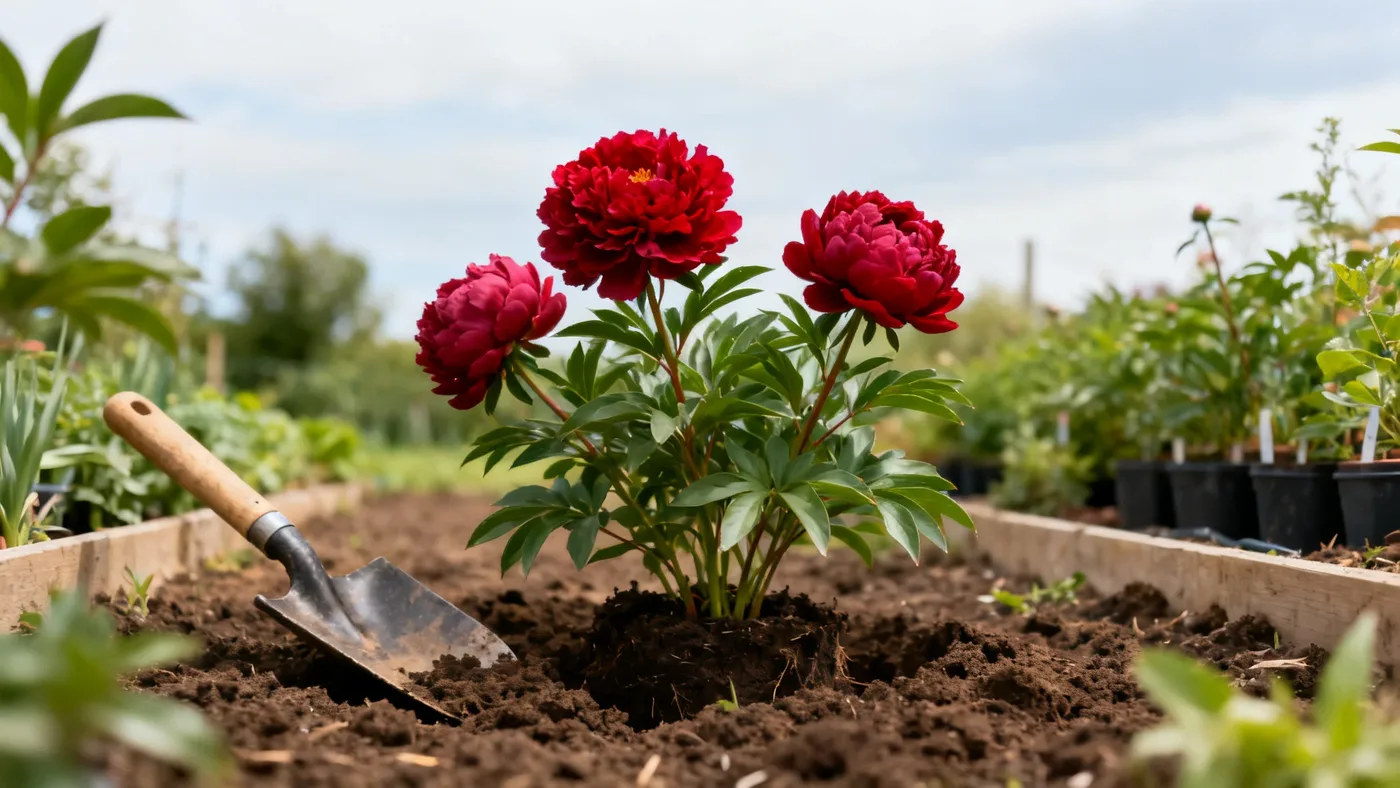
Once established, Kansas Peony blooms in late spring, typically in May depending on your zone and local weather. The flowers are deep red to rose-red, double blooms with a full, rounded form. Most flowers last 2 to 3 weeks, and deadheading spent blooms encourages the plant to redirect energy into root storage rather than seed production.
For care after planting and through the growing season, see our complete guide to Kansas Peony care.
Quick Reference: Kansas Peony Planting Checklist
| Aspect | Requirements |
|---|---|
| Hardiness zones | 3–8 |
| Best planting season | Fall (4–6 weeks before first frost); spring for container plants |
| Sunlight requirement | Full sun, 6+ hours daily |
| Soil type | Fertile, humus-rich, well-drained loam |
| Soil pH | 6.5–7.0 (slightly acidic to neutral) |
| Planting depth (eyes) | 1–2 inches below soil surface (critical) |
| Spacing between plants | 3 feet (30–36 inches) |
| Hole size | 18–24 inches wide, 12–15 inches deep |
| Mulch depth | 2–3 inches, kept 2–3 inches from crown |
| First-year watering | Regular, especially during dry spells |
| Mature plant size | 24–30 inches tall, 24–36 inches wide |
| Years to full blooming | 3–4 years from planting |