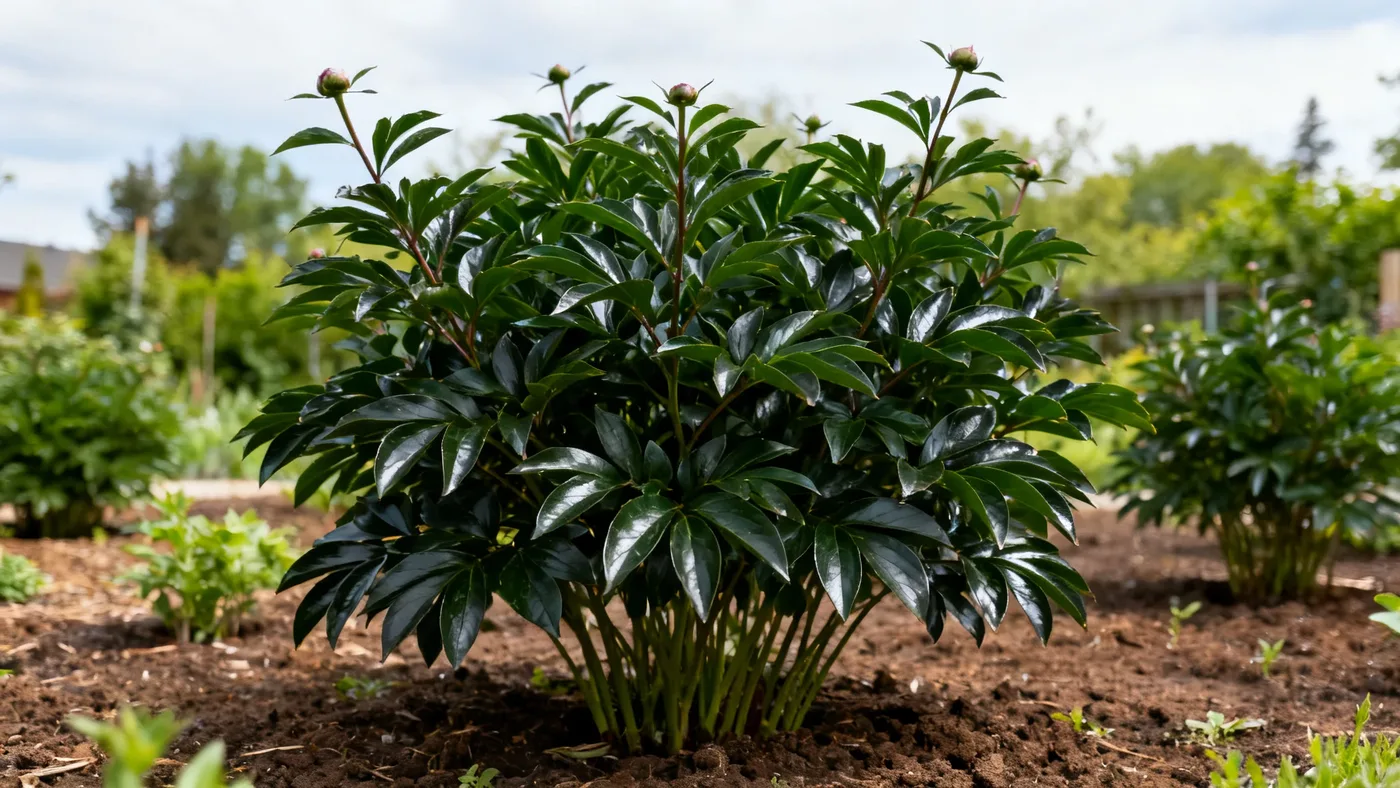
Kansas Peony vs Karl Rosenfield: How to Tell Them Apart
Kansas Peony and Karl Rosenfield are two of the finest red double peonies available to home gardeners. Walk into a nursery or browse a peony catalog, and you'll find them mentioned side by side so often that many people assume they're the same plant. Both are Paeonia lactiflora cultivars with similar growth habits and dramatic deep-red blooms. But if you're choosing between them, or comparing them in your garden, understanding their similarities and differences helps you make the right decision.
At-a-Glance Comparison
| Attribute | Kansas Peony | Karl Rosenfield |
|---|---|---|
| Hardiness (USDA zones) | 3–8 | 3–8 |
| Mature height | 24–30 in (up to 36 in) | Similar height |
| Mature width | 24–36 in | Similar spread |
| Bloom color | Deep red to rose-red | Deep red |
| Bloom form | Double 'bomb' type | Double form |
| Bloom season | Late spring (early-to-midseason) | Late spring (early-to-midseason) |
| Fragrance | Slight to none | Varies by source |
| Years to full flowering | 3–4 years | 3–4 years |
What immediately stands out is how much these two cultivars share. Growing side by side, you'd be hard-pressed to notice a difference in size, hardiness, or establishment timeline. The meaningful distinctions come down to subtle bloom characteristics and which cultivar aligns with your gardening priorities.
Growing Conditions: Nearly Identical Needs
Both Kansas Peony and Karl Rosenfield thrive under the same conditions because they share identical breeding heritage. Each needs full sun (6 or more hours daily) to produce abundant, sturdy blooms. Light afternoon shade is tolerated in hot southern zones, but flowering and stem strength decline noticeably with additional shade.
Soil is the foundation. Both prefer fertile, humus-rich, well-drained loam with a pH between 6.5 and 7.0. Waterlogged soil is the enemy for either cultivar, so if your site stays soggy, amend heavily with compost and consider raised beds.
Kansas Peony requires regular watering during its first 1 to 2 years to establish a deep root system. Once mature, it becomes moderately drought-tolerant. Karl Rosenfield follows the same pattern. Space both 3 feet (30 to 36 inches) apart to ensure air circulation, which reduces disease pressure.
In terms of fertilizing, both appreciate a light application of a low-nitrogen, phosphorus-leaning fertilizer (or balanced organic compost) in early spring as shoots emerge. Avoid excess nitrogen, which promotes soft, floppy growth and fewer blooms.
Size and Timeline: Patience Rewarded
Both cultivars reach a mature width of 24 to 36 inches and a height of 24 to 30 inches (some sources list up to 36 inches) as they fill out. This growth happens over roughly 3 to 4 years. During establishment, you can expect the clump to gain about 6 to 12 inches of spread annually. Neither cultivar races to mature size, but once they do, they settle in for the long haul.
Expect limited flowering in the first year or two. By year 3 or 4, flowering reaches its peak and stays abundant for decades. Peonies are a long-term investment. Once established, both Kansas Peony and Karl Rosenfield commonly bloom reliably for 50 years or longer with minimal care, making them some of the longest-lived perennials you can plant.
The Bloom Difference
Both cultivars bloom in late spring, classified as early-to-midseason bloomers. In most zones (3–8), expect flowering to occur in May, though timing shifts 2 to 4 weeks depending on your region and specific zone. In cooler zones, blooms arrive later; in warmer zones, earlier.
Kansas Peony produces deep red to rose-red blooms with the signature double 'bomb' form that makes peonies so beloved in cottage gardens and cut-flower arrangements. The fragrance is slight to none, which is characteristic of red-flowered peonies in the lactiflora group, as red cultivars typically carry less fragrance than their pink or white relatives.
Karl Rosenfield blooms in deep red with a double form. Details about fragrance vary depending on the source you consult, so if scent matters to your selection, reach out to local peony nurseries to confirm their experience with this particular cultivar.
Which Should You Choose?
Choose Kansas Peony for:
- Proven, documented history. Introduced in 1926 by Brand Peony Farm in Faribault, Minnesota, Kansas Peony brings a century of reliable garden performance to your beds.
- Classic cottage-garden aesthetics. The deep red-to-rose-red palette pairs beautifully with pinks, purples, and whites in perennial borders.
- Cut-flower reliability. The double 'bomb' form holds up beautifully in arrangements and can be dried for long-term display.
- Predictable fragrance level. Knowing upfront that Kansas Peony carries little to no scent removes uncertainty if you're designing around fragrant peonies.
- Companion planting confidence. With its well-established reputation, you'll find plenty of nursery guidance and garden design inspiration online.
Choose Karl Rosenfield for:
- Strong cultivar recognition. Among serious peony growers, Karl Rosenfield has a long reputation in the trade.
- Potential for fragrance. If reports indicate fragrance in your region, this may tip the scales in Karl Rosenfield's favor for a scented garden.
- Avoiding duplication. If neighbors or friends already grow Kansas Peony, choosing Karl Rosenfield gives your garden a distinct cultivar.
Pests, Diseases, and Year-Round Care
Both cultivars face identical pest and disease challenges because they're the same species. Botrytis blight (gray mold) is the most common problem in wet springs. Powdery mildew, leaf spot, and peony scale can appear under certain conditions. Ants frequently visit the buds to feed on nectar secretions, but this is benign and causes no harm to the plant.
Good air circulation from proper spacing (3 feet apart) is your best defense against fungal issues. In late fall after frost kills back the foliage, cut both cultivars to a few inches above ground. This removes potential overwintering spores and keeps beds tidy.
Toxicity note: Both peonies are mildly toxic to dogs and cats if ingested, causing vomiting, diarrhea, or drooling. This is not a significant hazard with normal garden handling, but it's worth knowing if you have curious pets.
Companion Plants and Landscape Uses
Both cultivars fit beautifully into the same garden roles. Plant them in perennial borders with bearded iris, roses, catmint (Nepeta), ornamental alliums, or Siberian iris. In cutting gardens, both produce stunning double blooms. Cottage gardens benefit from their romantic form, and they work as foundation plantings where a bold splash of color is needed.
The main consideration is bloom timing. Since both flower in late spring (May in most zones), pair them with earlier bloomers (tulips, hellebores) or later bloomers (coneflowers, daylilies) to extend your garden's flowering season.
The Bottom Line
Kansas Peony and Karl Rosenfield are both excellent choices for gardeners seeking a hardy, long-lived red double peony. Their growing requirements, hardiness, and timelines are virtually identical. The decision often hinges on fragrance preference, local availability, and whether you want to commit to a cultivar with a well-documented 100-year history or explore a respected alternative.
For comprehensive information on establishing and caring for Kansas Peony through every season, consult the complete growing guide. Whether you choose Kansas Peony or Karl Rosenfield, you're investing in a plant that will reward your patience with decades of reliable, stunning blooms.
Quick Reference: Growing Specs at a Glance
| Growing Requirement | Kansas Peony & Karl Rosenfield |
|---|---|
| Hardiness zones | 3–8 |
| Sun requirement | 6+ hours full sun daily |
| Spacing between plants | 3 feet (30–36 in) |
| Soil pH ideal range | 6.5–7.0 (slightly acidic to neutral) |
| Soil type | Fertile, humus-rich, well-drained loam |
| Establishment watering period | First 1–2 years, regular moisture |
| Annual growth spread | 6–12 in per year while establishing |
| Bloom season | Late spring (May, shifts 2–4 weeks by zone) |
| Years to peak flowering | 3–4 years |
| Expected lifespan | 50+ years |