Is Kansas Peony Fragrant? What Its Scent Is Really Like
A customer once stood in a row of Kansas at full bloom, pushed her nose into a bright red double, and asked us why it smelled like nothing. Our field manager's answer was short: it depends on which hour you ask. We often hear that exact complaint, and the answer is less of a dodge than it sounds. Each plant blooms for only about two weeks, so you get a narrow window to meet the scent, and one cold or windy afternoon can waste a good part of it.
This guide covers everything you need to know about Kansas Peony fragrance, from what the sources actually say about it to how heat, wind and time of day change what your nose picks up, and how it compares with the other red peonies you may be weighing. We will be straight about where the written record runs thin, because peony scent claims get repeated far more often than they get checked.
Does Kansas Peony Smell Like Anything at All?
The honest starting point is that the reference sources we trust do not rate Kansas for scent either way. NC State Extension says only that some cultivars are fragrant and that a few have disagreeable fragrances, and its list of lactiflora cultivars includes Kansas with no scent note attached. Kansas also turns up as a carmine red double with scent left out, though peonies as a group are revered for their fragrant flowers.
Silence in a reference list is not the same as a flat "no." Those pages are mostly about hardiness and flower form, and they skip scent for plenty of cultivars that smell wonderful. Several nurseries do market Kansas for fragrance, and we have read those listings. We treat them as reports from people who grow the plant, not as measurements.
Our position, then, is this: Kansas has a reputation for scent and you should expect to smell something when you lean into an open double. Do not expect a guaranteed perfume. Scent that runs from fragrant for some to disagreeable for a few tells you scent is a cultivar-by-cultivar trait. Your own nose, on your own plant, settles it.
The Myth That Every Red Peony Is Perfumed
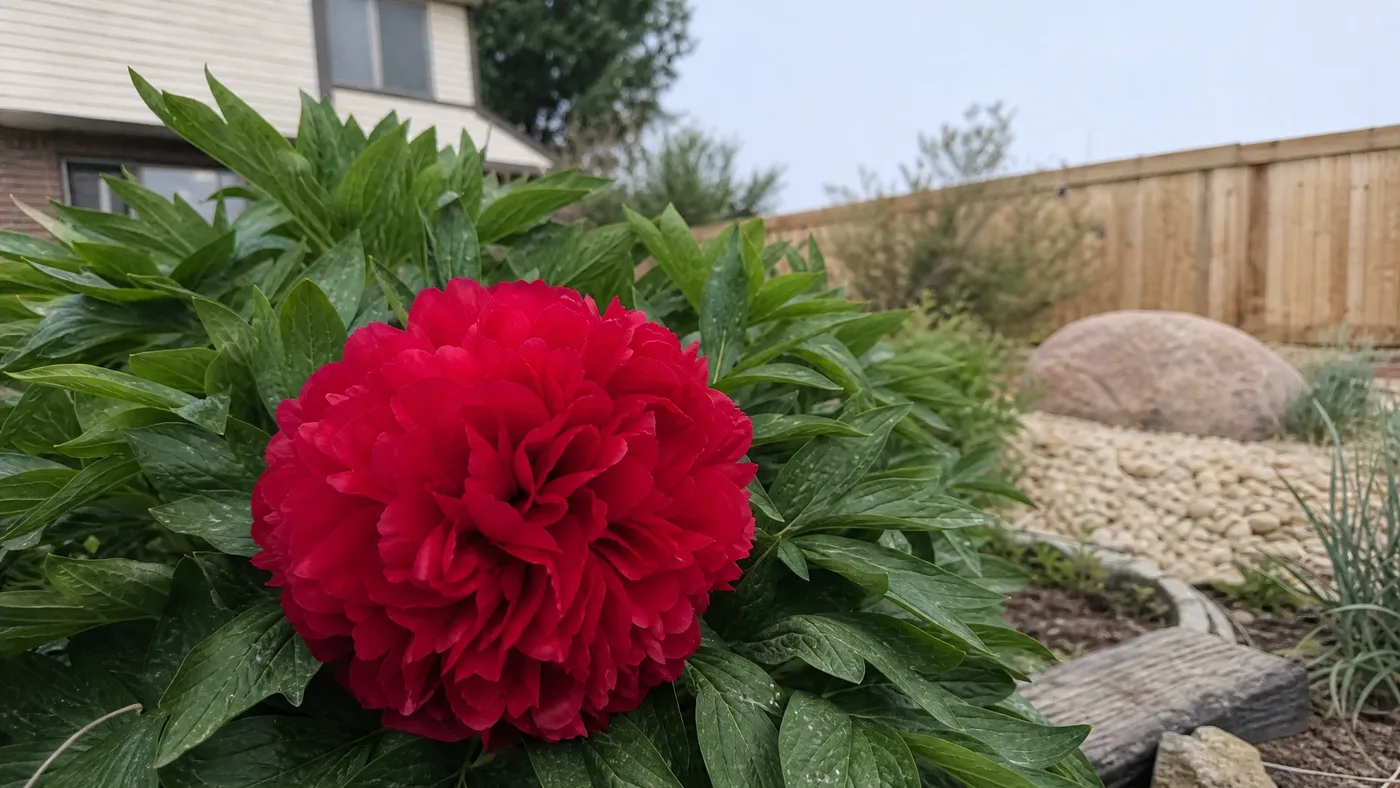
People assume a deep red bloom must carry a heavy, old-fashioned perfume, and we hear it at the farm every June. Color does not predict it. Kansas is double, bright clear red, containing almost no blue, and fading very little. Every word of that is about looks. Nothing about that red connects it to a scent.
Even the color is described differently depending on who is looking. The flowers are also described as fully double and rose pink, and Kansas sits among the pink-flowered lactifloras. Kansas reads as clear red to some and shades toward pink to others, which tells you how loosely color words get used. Shopping by color for fragrance is a coin toss.
Look at the comparison reds. Red Charm is red and fragrant, and Red Magic is large, double, fragrant and red. Those notes come cultivar by cultivar, which is the point. A few peonies carry disagreeable scents, so red gives you no protection in either direction. Judge each cultivar on its own record, and where the record is thin, on your own nose.
Is Kansas Peony Strong Enough to Scent a Room?
No source puts a number on how far Kansas scent carries, so anything we say here is practice, not measurement. A single double bloom in a bud vase gives you a pleasant surprise when you lean in or walk past, and that is about the extent of it. People who buy peonies hoping to perfume a whole house are usually disappointed, and that is true of most cultivars, not only this one.
A realistic expectation is one of a handful of stems on a kitchen table or a nightstand, in a room with the door closed. Cut blooms warm up indoors and open fully, and an open double gives off more than a tight bud does. Put the vase where you will brush past it, not across the room.
In the garden the scent is even more local. Outdoors, air moves constantly and dilutes everything, so you notice scent mostly when you are close to the flowers on a still day. Young plants make it harder still. A peony takes 2–5 years to reach maturity, and a newly planted clump carries only a few blooms. Judging Kansas by a one-stem first spring is like judging a cake by the smell of the oven.
Rose, Spice or Candy on Kansas Peony Blooms
Peony scent is not one thing. It runs from fragrant to disagreeable, so two cultivars can smell nothing alike, and anyone who tells you all peonies smell of rose is repeating a habit. We looked for a sourced description of the Kansas scent specifically and did not find one, so we will not hand you an adjective we cannot back up.
What we can do is tell you how to describe it yourself. Smell the center of a fully open double first, where the petals are densest, and then a loose outer petal on its own. Ask whether the scent is sweet or sharp, light or heavy, and whether it reads as floral, green or spicy. Write down your answer the first season, because the second season you will have forgotten.
If you smell something you dislike, you are not imagining it. The sources say outright that a few peony cultivars carry disagreeable scents, and nose-to-nose is the only way to find out where a particular plant lands. Most people who stand at a clump of Kansas on a warm morning leave with an opinion, and it is usually a favorable one.
Heat, Wind and the Time-of-Day Nose Test
Scent is not a fixed property of the flower. Weather and the hour change how much reaches you, and so does the age of the bloom. Kansas flowers from late spring to early summer, and the plant is happy in full sun or partial shade, so the same clump can smell different at 7 a.m. than at 2 p.m. We often see customers sniff at noon in hard sun, find little, and walk away.
Cold mornings mute scent, and so does rain. Wind carries it off before it reaches you. A warm, still morning, once the dew is gone but before the afternoon heat sets in, gives you the best odds. Blooms that are just fully open usually smell better than ones that have been open for days and are starting to drop petals.
A Simple Nose Test
Run the same test a few times across the two-week window so you are comparing like with like.
- Pick a warm, still morning after the dew has dried and before the sun is high.
- Choose a bloom that opened within the last day or two, not a faded one.
- Cup your hand loosely behind the flower to block any breeze, and smell it from a few inches away.
- Repeat in the afternoon on the same bloom and note the difference.
- Check again as the plant nears the end of its run, using the timing in our bloom time guide.
Partial shade keeps blooms cooler, which can help scent last through the afternoon, but our sun requirements guide explains why we still plant for sun first. A fragrant plant that does not bloom is no use to anyone.
How Kansas Peony Stacks Up Against Other Reds
The belief here is that all red lactiflora cultivars smell alike. They do not, and the written record shows it, even if the record has gaps. The table below sets Kansas next to three reds you may be weighing and shows what the sources say about each one's scent.
| Cultivar | Flower | Scent in the sources |
|---|---|---|
| Kansas | Double, bright clear red | Carries no scent note. Marketed for fragrance by some nurseries. |
| Karl Rosenfield | Dark red double | No scent note. |
| Red Charm | Early blooming, red, herbaceous hybrid | Listed as fragrant by NC State. |
| Red Magic | Large, double, red | Listed as fragrant by NC State. |
Read that table carefully. Red Charm and Red Magic have documented fragrance, which makes them the safer picks if scent is your top reason to buy. Red Charm is also an herbaceous hybrid and blooms early, so it will not overlap with Kansas the way a fellow lactiflora does.
Karl Rosenfield is the cultivar most often set against Kansas, and it is a dark red double with no scent note, just as for Kansas. If you are stuck between them, our Kansas versus Karl Rosenfield comparison goes through the visible differences. Choose Kansas for its clear, nearly blue-free red and its reputation, and treat the scent as a pleasant bonus you will confirm yourself.
What Kansas Peony Will Smell Like in Your Yard
Here is the verdict. Expect a noticeable scent from open doubles on a warm, still morning, close up and not across the yard. Expect it to be variable from day to day and plant to plant. Do not expect it to carry through a house from a few stems. That is the honest answer, and a plant with a long list of sourced fragrance claims would not need us to hedge it this much.
The bigger lever is where you put the plant. Scent you have to walk to the back of the border to find is scent you will never learn. Plant Kansas beside a path you use daily, near a bench, a gate, a kitchen door or a patio edge, in the sun it prefers and in deep, fertile, humus-rich soil. Our landscape ideas guide has layouts that keep a peony near foot traffic without crowding it.
Be patient with it. Peonies are a plant-once, enjoy-for-decades choice, and a young clump will give you a thin showing for the first few springs. Scent follows the number of open blooms, and the number of blooms follows the age of the plant. If you buy from us, our buying guide explains what to check when your plant arrives, and a good start is what pays off in the later years.
Judging Kansas Peony by Your Own Nose
Kansas has a reputation for fragrance that the reference pages neither confirm nor contradict, and red color tells you nothing about scent. Treat it as a cultivar with a good chance of being pleasantly scented up close, not as a room perfumer. Weather, hour and bloom age will move the needle more than most people expect, so test more than once.
So put it where you walk past it every day, and judge the scent yourself on a warm morning.
Kansas Peony
Nursery-grown Kansas Peony in sizes from #2, shipped to your door.
From $74.60
Shop Now →Our Kansas Peony plants spend their lives on our own farms, where the soil is deep, fertile and well drained and the sun reaches them all day. It is the setting we would choose if we wanted the strongest bloom and the best shot at fragrance. Everything we sell is grown by our own small business on that ground, so when you are ready to plant one by your walkway, have a look around our shop.