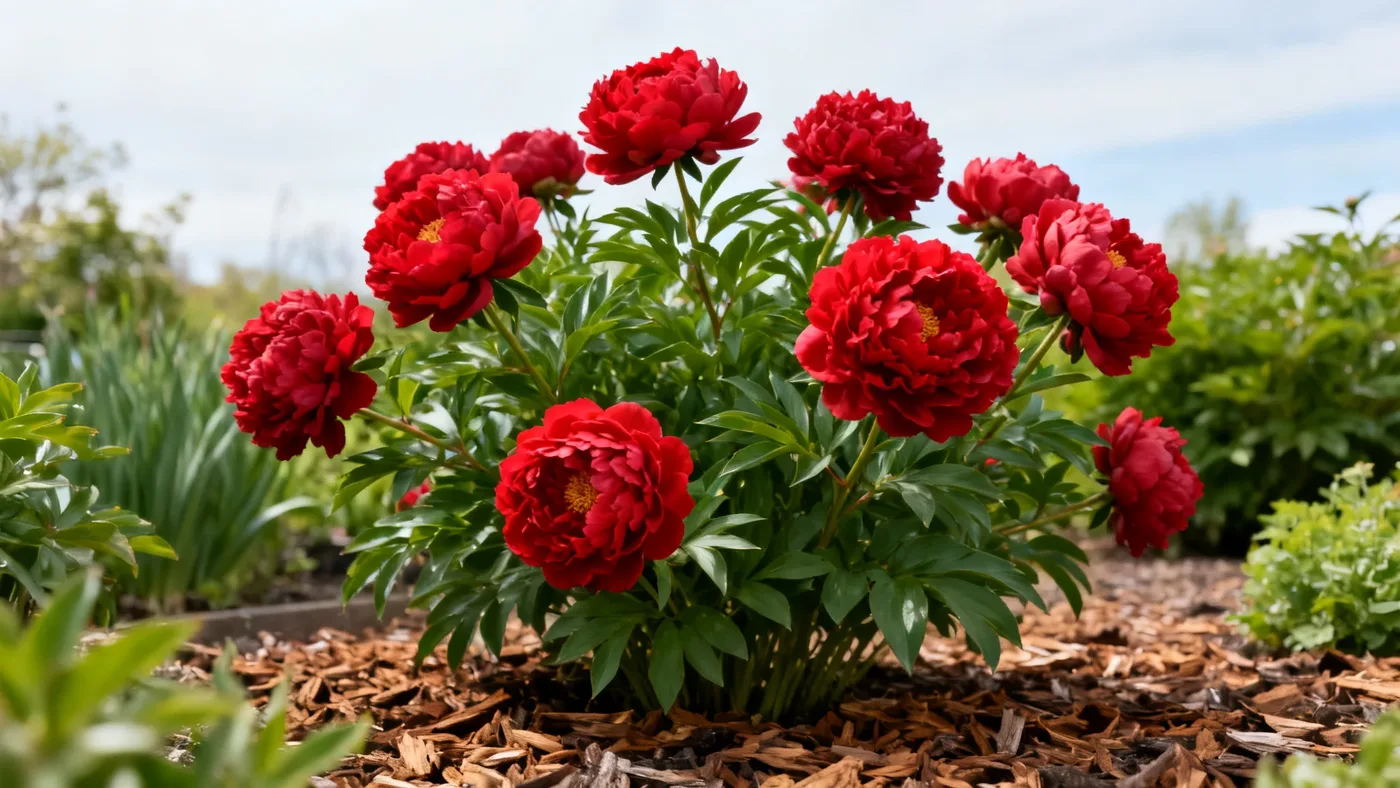
Kansas Peony Fall Color: What to Expect in Autumn
If you have Kansas Peony plants in your garden, you may have noticed something changing in late September. The deep green, glossy leaves that carried your plants through summer are beginning to shift. Soon, your 24- to 30-inch peonies will display bronze and burgundy tones before their foliage dies back for the season. This transformation is not a sign of distress. It's a natural part of the peony cycle, and understanding what's happening helps you care for your plants properly as temperatures drop.
What Kansas Peony Foliage Looks Like in Fall
Kansas Peony is a herbaceous perennial, which means it dies back to the crown each winter. During the growing season from spring through early fall, the plant produces compound divided leaves with a rich, glossy dark green finish. These leaves are the engine of the plant, storing energy in the tuberous roots below ground that will fuel next spring's growth and bloom.
As autumn arrives and day length shortens, the plant naturally enters dormancy. The foliage begins to lose its chlorophyll. This isn't wilting or disease. It's your peony preparing for winter. The leaves gradually take on warmer tones: bronze first, then deeper burgundy and rust hues as the weeks pass. Some gardeners find this fall color attractive in its own right, while others see it as a signal that it's time to tidy up the bed.
The timing and intensity of fall color varies by zone and weather. Gardeners in USDA zones 3 and 4 will see the transition begin by mid-September and accelerate through October. In warmer zones (5 through 8), the shift may not start until late September or early October, and it can happen more gradually. A hard frost will hasten the process considerably.
The Color Transition Timeline
Your Kansas Peony's fall color transition typically unfolds over 4 to 6 weeks, depending on your climate and autumn weather. Here's what to watch for.
Late September to early October: The first sign is often a loss of the glossy sheen. Leaves may look slightly dull or dusty. Edges and veins may show hints of bronze or red.
Mid-October: Color shifts noticeably deeper. Bronze tones dominate. Some burgundy or wine-colored patches may appear, especially on older foliage or areas getting more sun.
Late October through November: The entire plant takes on rich rust and burgundy tones. Leaves begin to thin and fall from the stems. By late November or the first hard frost (which occurs at different times across zones 3 through 8), the foliage is largely gone or paper-thin.
This timeline is flexible. Warm, wet autumns may slow the transition. Early frost can accelerate it dramatically. Zones 3 and 4 gardeners typically see completion by late October. Zones 6 through 8 may still have color lingering into November.
Bronze and Burgundy: When and Why It Happens
The shift to bronze and burgundy foliage is driven by falling temperatures, shortening days, and the plant's internal signals. As the peony moves into dormancy, it redirects resources from the leaves back to the crown and roots. The chlorophyll (the pigment that makes leaves green) breaks down. This exposes other compounds: anthocyanins and carotenoids that were always present but masked by the chlorophyll. These pigments create the bronze, red, and burgundy colors you see.
Kansas Peony's fall color is more subdued than that of many trees and shrubs. You won't get the brilliant scarlet or golden yellow of a sugar maple. Instead, expect warm, earthy bronze and deep burgundy tones. Some plants show more color than others, depending on growing conditions. A peony that spent the summer in full sun and well-watered may show more vibrant fall color than one in partial shade or during a dry season. This variation is normal.
Seasonal Care in Fall
Fall is a critical time for peony care. What you do (and don't do) now sets the stage for strong spring growth and flowering.
Watering: Once frost arrives, you can stop regular watering. If your region has an unusually dry autumn and no rain for several weeks, water once or twice to help the crown enter winter with adequate moisture.
Feeding: Do not fertilize in fall. Excess nitrogen promotes tender new growth that frost will kill, wasting energy your peony needs to store in the roots.
Deadheading: If any flowers remained from early summer (unlikely by late September), remove them. If not, there's nothing to deadhead at this point.
Pest and disease management: Fall is the time to think about reducing overwintering spores. The fungi that cause peony diseases like botrytis blight and leaf spot survive on dead foliage. The more diseased plant material you remove, the fewer spores will be present in spring. This is why proper fall cleanup is so important.
Managing Fall Foliage for Spring Health
Once the first hard frost has killed back your peony foliage (typically by late October in zones 3 through 6, and into November in zones 7 and 8), it's time to cut back. Waiting for frost is important. Cutting too early can stimulate new soft growth that will be damaged by cold.
Cut the stems down to a few inches above the soil line, just after frost kills the foliage. Use sharp pruning shears or a knife. Remove all the cut foliage from the bed. Do not leave it in place or compost it in a casual pile. Bag it and dispose of it to avoid harboring disease spores. This cleanup is one of the single best preventive steps you can take against peony diseases.
You can apply a thin layer of compost or well-rotted organic matter over the crown in late fall, especially in colder zones. This is optional, but it offers modest protection during the hardest winters. Do not pile soil or mulch onto the crown itself. The crown should remain exposed.
A 2- to 3-inch layer of mulch around (but not touching) the crown will help moderate soil temperature swings and retain moisture. Shredded bark or straw works well. Remove it in early spring when shoots emerge.
Regional Variations by Zone
Kansas Peony is hardy in USDA zones 3 through 8, and fall care varies slightly by region.
Zones 3 and 4: Your fall is brief. Start watching for color change by mid-September. Plan to cut back by late October at the latest, before heavy snow arrives. Winter protection is worthwhile in zone 3. A layer of mulch or composted manure over the crown provides insurance against extreme cold.
Zones 5 and 6: You have a longer fall window. Color transition typically spans October. Cut back in late October or early November, after a solid frost.
Zones 7 and 8: Fall arrives later and lingers longer. Your peonies may not show significant color until October or November. You may not cut back until November or even December. The milder winters mean less winter protection is needed, but removing diseased foliage is still essential.
Pairing Fall Care With Next Spring's Success
Your Kansas Peony spends much of the year underground. Autumn is when you set up success for the following season. Proper fall cutback and cleanup reduce disease, conserve plant energy, and allow the crown to enter dormancy cleanly.
If you're new to growing peonies, or if you'd like to refresh your understanding of year-round care, read the full Kansas Peony Care: The Complete Growing Guide. That resource covers everything from planting depth to staking, plus troubleshooting common problems.
Fall Color and Autumn Interest Quick Reference
| Timing / Task | What to Expect / Action |
|---|---|
| Late September to early October | Foliage begins to dull; edges and veins show hints of bronze or red |
| Mid-October | Bronze tones prominent; some burgundy patches appear |
| Late October onward | Rich rust and burgundy throughout; foliage thins and drops |
| After hard frost (zone 3: late Oct; zones 5-6: early Nov; zones 7-8: late Nov) | Cut foliage to a few inches above ground; remove all cut material |
| Fall cleanup | Dispose of all foliage (bag it); do not leave it in the bed or compost pile on-site |
| Optional: late fall | Apply 2 to 3 inches of mulch around (not touching) the crown |
| Winter dormancy (November through early spring) | Peonies rest underground; no watering or feeding needed |
| Early spring | Remove mulch as shoots emerge; watch for new growth |