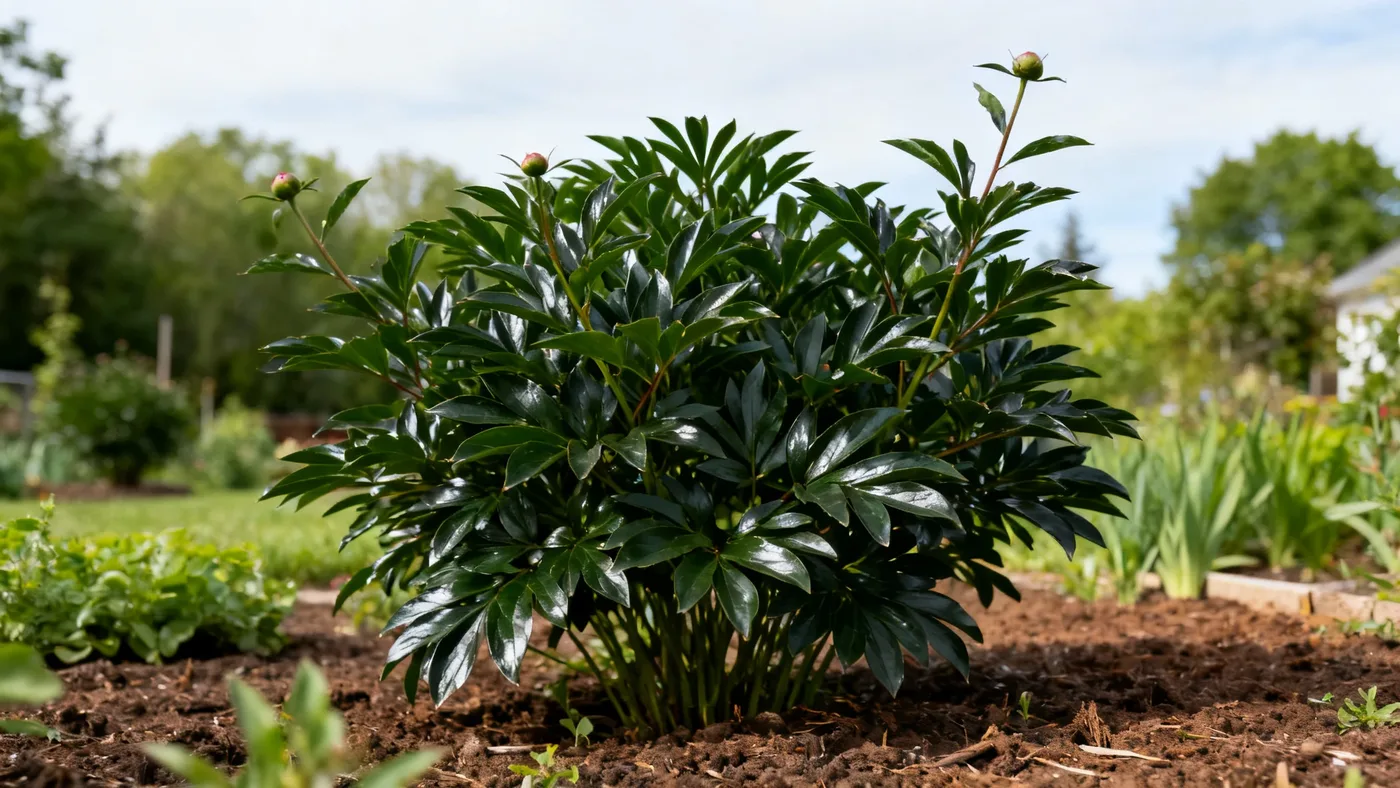
Watering Kansas Peony: How Much and How Often
Getting the watering right is one of the simplest ways to keep your Kansas Peony healthy and flowering year after year. These deep red peonies are not thirsty plants, but they do need consistent moisture during their first couple of years in the ground. Once established, they become quite drought tolerant, which makes them a low-maintenance choice for many gardeners.
The tricky part isn't watering too little, it's often watering too much. Kansas Peony roots despise soggy soil. Overwatering can trigger root rot and fungal diseases that no amount of care can fix. This guide walks you through exactly how much water your peony needs at each stage of growth, and how to recognize when something's gone wrong.
Understanding Kansas Peony's Water Needs
Kansas Peony is a herbaceous perennial that grows 24 to 30 inches tall and spreads 24 to 36 inches wide when mature. Its water needs change dramatically from year one to year three.
During the first 1 to 2 years after planting, your peony is establishing a deep root system. At this stage, it needs regular watering to keep the soil consistently moist (not soggy). Think of it as coaxing the roots downward into the soil rather than letting them dry out and stop growing.
After that initial establishment period, Kansas Peony becomes moderately drought tolerant. This means a well-established plant can handle periods without rain, though it still flowers better with regular moisture. In zones 3 to 8, where Kansas Peony grows, seasonal rainfall often handles much of the watering once the plant is settled in.
The one non-negotiable requirement is drainage. Kansas Peony will not tolerate waterlogged soil. It needs fertile, humus-rich, well-drained loam with a soil pH between 6.5 and 7.0. If your soil holds water, that's where problems start, not where good intentions end.
What You'll Need
- Watering can (1 to 2 gallon capacity) or soaker hose
- Mulch (2 to 3 inches of wood chips or compost)
- A moisture meter or your index finger
- A note of your local rainfall and average temperatures
A soaker hose is ideal because it delivers water directly to the soil without wetting the foliage. Wet foliage invites fungal problems, particularly botrytis blight, which thrives in damp, crowded conditions.
Watering Steps by Growth Stage
Year One and Two: Establishment Phase
- Water deeply after planting. When you first plant your Kansas Peony (in fall for bare-root divisions, or spring for container-grown plants), water thoroughly to settle the soil around the roots. The soil should be moist to a depth of 8 to 10 inches.
- Establish a regular schedule. During the growing season, water your peony once or twice per week, depending on rainfall and temperature. A good rule is to water when the top inch of soil feels dry to the touch. In cool springs, once weekly may be enough. In hot, dry spells, twice weekly is better.
- Apply water at the base only. Direct all water to the soil around the crown and roots. Never spray water over the foliage. This keeps the leaves dry and reduces the risk of leaf spot and botrytis blight, both common peony diseases.
- Mulch generously. After planting, apply 2 to 3 inches of compost, wood chips, or shredded bark around the plant base. Leave 2 inches of space around the crown (where the stems emerge) to prevent rot. Mulch keeps the soil cool and moist, reduces evaporation, and moderates temperature swings that stress young roots.
- Check soil moisture before watering. Push your finger into the soil 2 inches deep. If it feels moist, skip watering. If it feels dry, water thoroughly. A moisture meter removes the guesswork if you prefer one.
- Water less in cool, wet springs. In years with frequent rain or in cooler zones (zones 3 to 4), you may need to water less often or not at all during spring. Overwatering is a bigger risk than underwatering in cool, damp climates. Let rainfall do the work.
Year Three and Beyond: Established Plants
- Scale back to seasonal watering. By the third year, your peony's roots have spread deep into the soil. You can rely much more on rainfall. Water only during dry spells, when you notice the top 2 inches of soil are dry and it hasn't rained in two weeks or more.
- Water deeply and less frequently. Rather than light, frequent watering, give your established plant one thorough soaking per month during the growing season if rainfall is scarce. This encourages deep rooting and drought tolerance.
- Maintain the mulch layer. Keep 2 to 3 inches of mulch around the base year-round. Refresh it annually in spring to replace decomposed material. Good mulch is your partner in moderation, keeping moisture steady without waterlogging.
- Reduce watering after bloom. Kansas Peony typically blooms in May (though timing shifts 2 to 4 weeks depending on your zone and spring conditions). After flowering ends, water only when the soil is dry. The plant is storing energy in its roots for next year, and it doesn't need as much water in summer.
- Stop supplemental watering by late summer. By August, cut back watering significantly to encourage dormancy and prepare the plant for winter. Light watering is fine if there's a severe drought, but regular watering in late summer can trigger tender new growth that frost will kill.
Reading Your Plant: Signs of Drought and Overwatering
Signs of Insufficient Water
An underwatered Kansas Peony typically shows these symptoms:
- Leaves look dull or grayish-green instead of glossy and vibrant
- Foliage wilts in the heat of midday, even if it perks up by evening
- Flower buds fail to develop or open fully
- Stems feel weak or bendy at the base
- Lower leaves yellow and drop prematurely
If you catch these signs early, deep watering usually revives the plant within a day or two. For established, mature peonies, drought stress is rare unless you live in a zone 7 to 8 with very hot summers. Even then, the plant usually survives; it just may skip a season of heavy bloom.
Signs of Overwatering
Overwatering is far more dangerous to Kansas Peony than drought. Watch for these warning signs:
- Stems feel soft or mushy, particularly at the base near soil level
- Foliage yellows from the bottom of the plant upward
- Leaves develop brown or black spots with a fuzzy gray mold (botrytis blight)
- An unpleasant smell coming from the base of the plant, suggesting root rot
- The plant looks wilted despite wet soil
If you spot these signs, stop watering immediately and check the soil. If it's waterlogged, your peony may recover if you can improve drainage by adding compost or perlite to the planting area. Once root rot sets in deeply, recovery is unlikely.
Seasonal Watering Adjustments
Spring
As shoots emerge and buds form, your peony needs consistent moisture. Water regularly during dry springs. If you live in a zone with cool, wet springs, reduce frequency and let rain handle most watering. The bloom buds are forming now, so consistent moisture supports fuller flowers.
Summer (Post-Bloom)
After flowering in May (adjusted for your zone), switch to a minimal watering approach. Water only during heat waves or droughts. The foliage is now focused on replenishing the roots for next year, not on growth, so excessive water is wasted.
Fall
By late August or early September, stop supplemental watering unless drought conditions persist. Natural rainfall in fall is usually sufficient. Your peony will die back to the crown after a hard frost. At that point, foliage can be cut back to a few inches above soil level.
Winter
Dormant peonies need no watering. The crown and roots rest underground. Snow or winter rain provide what little moisture is needed. Do not water in winter, even if the soil looks dry on the surface.
Common Mistakes to Avoid
Mistake 1: Assuming frequent watering equals better growth. Many new gardeners water peonies lightly every day or every other day. This keeps the soil constantly moist, which invites fungal disease and root rot. Water deeply and less often instead.
Mistake 2: Spraying water over the leaves. Wet foliage is a botrytis blight invitation. Always water at the base using a soaker hose or watering can. If you use overhead watering, do it early in the morning so foliage dries quickly.
Mistake 3: Planting too deeply. If you plant the eyes (growing points) of a bare-root peony more than 1 to 2 inches below soil, it may never flower well, and the deeper burial can trap moisture around the crown. Plant at the correct depth before you even worry about watering.
Mistake 4: Forgetting about mulch. Bare soil around a peony loses moisture fast and gets hotter. Mulch moderates all of this, making your watering schedule more reliable and reducing stress on the plant.
Mistake 5: Watering on a fixed schedule regardless of weather. Your calendar is less reliable than the soil. Check soil moisture before you water, especially in spring and fall when rainfall is unpredictable.
Expected Results
A properly watered Kansas Peony may produce a few blooms in its first year, but typically reaches full flowering potential by year 3 to 4. Once established, peonies commonly produce dozens of double flowers per season and can bloom reliably for 50 or more years with minimal care.
You should expect the foliage to be glossy dark green throughout the growing season. Some bronze or burgundy tones in fall before frost kills the leaves back are normal. After the foliage dies in late fall, cut it back to a few inches above the soil surface to reduce disease spores overwintering on old plant material.
For more detailed information on caring for Kansas Peony year-round, see our complete growing guide.
Quick Reference: Watering Checklist
| Stage | Frequency | Amount | Key Reminder |
|---|---|---|---|
| Year 1-2 (Establishment) | 1-2 times per week | Deep watering, 8-10 in soil depth | Keep soil moist, not soggy. Water at base only. |
| Year 3+ (Established) | Monthly during dry spells | One deep soaking | Rely on rainfall. Water only if top 2 in soil is dry. |
| Spring (Growing) | 1-2 times per week as needed | Consistent moisture | Supports bud formation and bloom quality. |
| Summer (Post-Bloom) | Reduce significantly | Only during drought | Plant is storing energy, not growing foliage. |
| Fall & Winter | None (unless extreme drought) | Natural rainfall only | Plant is dormant. No supplemental water needed. |
| Warning Sign | Likely Cause | Action |
|---|---|---|
| Wilted foliage despite wet soil | Root rot from overwatering | Stop watering. Improve drainage. Expect slow recovery or loss. |
| Gray mold on leaves or stems | Botrytis blight from wet foliage | Remove affected leaves. Water at base only. Improve air circulation by spacing 3 ft between plants. |
| Dull foliage, weak growth | Insufficient water during establishment | Water more consistently during years 1-2. Check soil before each watering. |
| Buds fail to open | Botrytis or inconsistent watering | Ensure good air circulation, dry foliage, and consistent soil moisture during spring. |