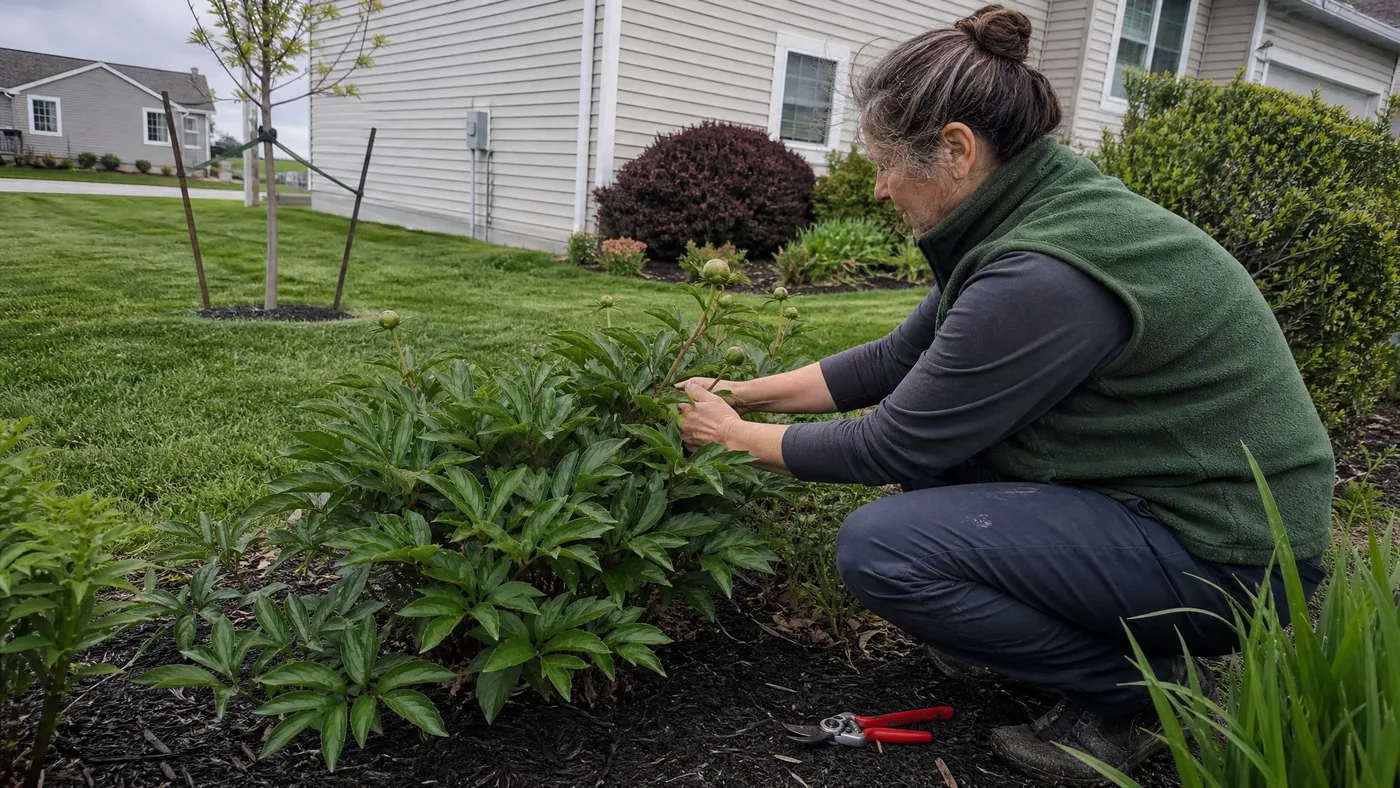
Disbudding Kansas Peony for Larger, Showier Blooms
On a wild peony, each stem forms a cluster of buds, and usually only the strongest goes on to set seed. The rest feed ants for a while, then fall away. Your Kansas Peony keeps that habit: one terminal bud sits at the stem tip with several smaller side buds crowded just below it, all sharing the same stem.
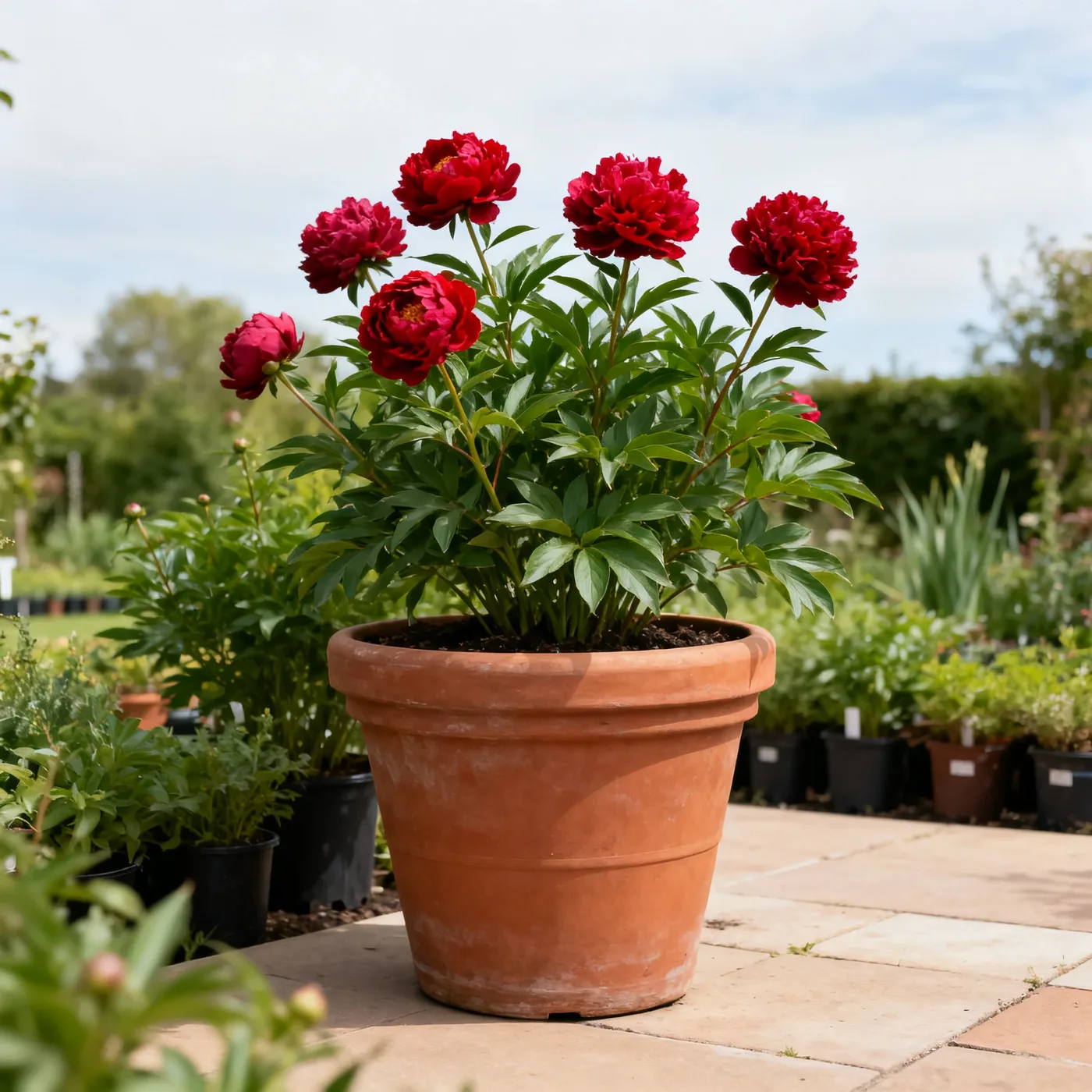
Disbudding done badly costs you. Pinch the wrong bud and the stem loses its one big flower. Pull too hard and you tear the stem. Done well, the double red bloom opens larger on a sturdier stem.
In this article, we'll go through whether to disbud at all, how to time and count the buds you remove, and what the ants and the plant itself get out of your choice.
Should Kansas Peony Be Disbudded at All?
Not on every stem, and not on every clump. Kansas Peony is grown for its large, fully double flower, a bright clear red that fades very little, and disbudding exists to make that one flower bigger. The price is fewer blooms per plant. If you value the number of flowers over their size, leaving the buds alone is a good choice.
Here is what actually changes. Left alone, a Kansas stem opens its terminal bud first and the side buds follow, so each stem keeps flowering a little longer. Across the whole plant, a peony blooms for about two weeks in late spring to early summer, and those staggered side buds help fill that window. Disbudding swaps that stagger for one big flower per stem.
The age of the clump matters too. Kansas takes 2–5 years to reach maturity, and a young plant with a handful of stems should be left alone. Let it flower as it likes and judge the plant before you start trimming. If it is not flowering at all, the fix lies elsewhere, and our guide to why a Kansas Peony won't bloom is the place to start.
You will often hear that every peony should be disbudded for the best show. We disagree. A clump of Kansas covered in medium-sized flowers has a cottage-garden charm of its own. Our choice: disbud an established clump selectively, and leave a young one entirely alone.
Cut Stems or Garden Show First
Decide what a stem is for before you touch a bud. A stem headed for a vase and a stem standing in the border want different things. In the vase, one large bloom on a clean stem is the whole point. In the border, the flower is judged from across the lawn, where a spray of medium blooms can look as full as one giant.
Stems You Plan to Cut
Disbud every stem you intend to cut. The cost to the plant is small, because Purdue Extension notes that picking flowers does not injure a peony but removing leaves does. Cut stems short and leave at least two leaves on each one. Our guide to cutting Kansas Peony for bouquets covers the right stage and vase life.
Stems That Stay in the Bed
A bigger flower is a heavier flower. Stake or cage early, because the large blooms are heavy and the long stems cannot support them. Kansas stands about 20–39 inches tall, so a disbudded stem at the tall end of that range will lean after the first heavy rain unless a ring is already in place.
Set the cage in spring while the shoots are still short, since it is nearly impossible to fit one around full-grown foliage without snapping stems. Then disbud the stems nearest the front, where people see the flowers up close, and leave the outer and rear stems with all their buds.
Our choice: disbud for the vase first. In the bed, disbud only what the eye lands on.
When the Side Buds Reach Pea Size
Every stem tip carries a cluster. The terminal bud sits at the very end and is visibly the fattest. The side buds, also called lateral buds, tuck into the angles where the upper leaves meet the stem, and they stay much smaller. Learn that layout on one stem and the rest are easy.
Timing is simple. Purdue Extension says to remove the side buds while they are still small, and for Kansas we tell customers to start when those side buds are about the size of a pea. One of the most common questions we get is how early is too early. If you can pinch the bud between finger and thumb without touching the terminal bud, it is not too early.
What Waiting Costs You
A side bud left to swell has already pulled sap from the stem, and it leaves a larger wound when it comes off. Later removal also means you are more likely to bump the terminal bud, which is the one you are protecting. Work should happen within the stretch before bloom, so check the clump every few days once buds show.
The calendar shifts with the spring. Kansas flowers from late spring to early summer, and a warm spell speeds the buds along while a cold snap slows them. Go by bud size, not by date.
Make a first pass at pea size, then a second pass a few days later for the stragglers you missed. That is the choice we make every year.
How Many Buds to Leave per Stem
One. The terminal bud, and nothing else, is the standard answer and the one we follow for cut stems. Every side bud left in place is another mouth on the same stem, so the terminal bud has to share. The table below shows how we adjust that rule to what each stem is for.
| Stem | Buds to keep | Why |
|---|---|---|
| Cut for the vase | Terminal only | One large bloom on a clean, strong stem |
| Front of the border | Terminal only | The largest flower, seen up close |
| Back of the border | Terminal plus the highest side bud | A second flower opens after the first and extends the show |
| Thin or weak stem | Remove none | It cannot carry a large double flower, so let it bloom as it is |
Before you finish a stem, look at the terminal bud once more. If it is damaged, blackened or missing, keep the highest healthy side bud instead and do not leave the stem with nothing. A stem with a smaller flower beats a stem with no flower at all.
Which one to keep is never in doubt, as long as you resist the urge to keep two "just in case." The biggest bud at the tip stays. Everything beneath it goes.
Pinching or Snipping Kansas Peony Side Buds
Both methods work, and size decides between them. At pea size the buds are soft and a thumbnail does the job cleanly. Once they are thicker, or if your fingers are clumsy among crowded stems, small sharp snips give a neater cut and put less strain on the stem. Wipe the blades with rubbing alcohol between plants.
Work gently. Peony stems at this stage are crisp and will snap at the base if you twist them, so support the stem before you do anything else.
- Pick a dry morning, when stems are firm and the foliage is not wet.
- Hold the stem with one hand just below the bud cluster.
- Identify the terminal bud and mark it in your mind as the one that stays.
- Pinch or snip each side bud at its base, leaving the leaf beside it in place.
- Check each leaf angle again for tiny buds you missed.
- Carry the removed buds out of the bed rather than dropping them around the crown.
Leave the leaves alone, because removing leaves hurts the plant. After bloom, the same snips take off spent flowers, which comes before cutting the foliage back in autumn. Our guide to pruning Kansas Peony covers that stage in full.
What Ants Do on Kansas Peony Buds
Look at a peony bud on a warm morning and you will often find ants working its surface. They are collecting sweet nectar that the bud produces before the flower opens. In the wild, that sugar is part of why the lower buds feed ants and then fall away, as the strongest bud sets seed.
You may have heard that peonies need ants to open their buds. They do not. A bud opens on its own schedule, and the ants are simply taking a free meal. Some observers think the ants may discourage other insects that chew on buds, though we would not call that settled. They do no harm to the flower and need no treatment.
That leaves a question for the disbudder: should you leave some buds on? A fully double flower like Kansas hides much of its pollen, so the open bloom is a modest meal for pollinators compared with a single-flowered peony. The bud-stage sugar is the bigger offering the plant makes to insects.
So we keep a balance. Disbud the stems you will cut or show, and leave side buds on a few stems at the back so the ants and other visitors still have something to feed on. Do not spray for ants. If you see actual chewing damage, check our guide to Kansas Peony pests and diseases to tell the cause.
What Disbudding Does to the Kansas Peony Bush
We often see new owners worry that disbudding sets the plant back. In our rows, it does not, and the reason is simple: you are removing buds, not leaves.
Foliage and Root Energy
The dark green, divided foliage of Kansas is the part of the plant that does the work through summer, and it stays intact. The plant spends less on flowers and has no seed to ripen from the buds you took off. We cannot give you a measured figure for how much energy that saves, and we would be wary of anyone who does. What you can count on is that the leaves keep feeding the roots all season.
Next Year's Growth
New shoots form on the crown through summer and fall, fed by the leaves. That is why we leave the foliage until it dies down, then cut it back in autumn. Disbudding changes how this year's flowers look and does nothing to take next year's shoots away.
What it does change is stem strength. A stem with one flower to feed tends to carry it better than a stem with four. Still, size brings weight, so keep the cage in place.
Disbudding Kansas Peony Without Regret
Settle the choice by what you want from the plant. For cut flowers, disbud every stem you plan to cut down to the terminal bud, at pea size. For an exhibition-minded gardener, the same rule applies, with a second pass and a cage in place before the shoots get tall. For a cottage garden, disbud the front stems and let the rest flower as they please. For a young clump, leave everything alone.
If you are still unsure, try it on one stem. When the buds show next spring, mark one stem, disbud it, and leave its untouched neighbor as it is. By next June you will see for yourself which flower you prefer.
Kansas Peony
Nursery-grown Kansas Peony in sizes from #2, shipped to your door.
From $74.60
Shop Now →Kansas Peony spends its seasons on our farms in rich, deep ground that sheds extra water, under sun that stays on the bed from early morning until the light fades. We raise top-quality plants as a small business, and every one comes from land of our own. When you are ready to plant a clump and try disbudding for yourself, come see what we have in the shop.