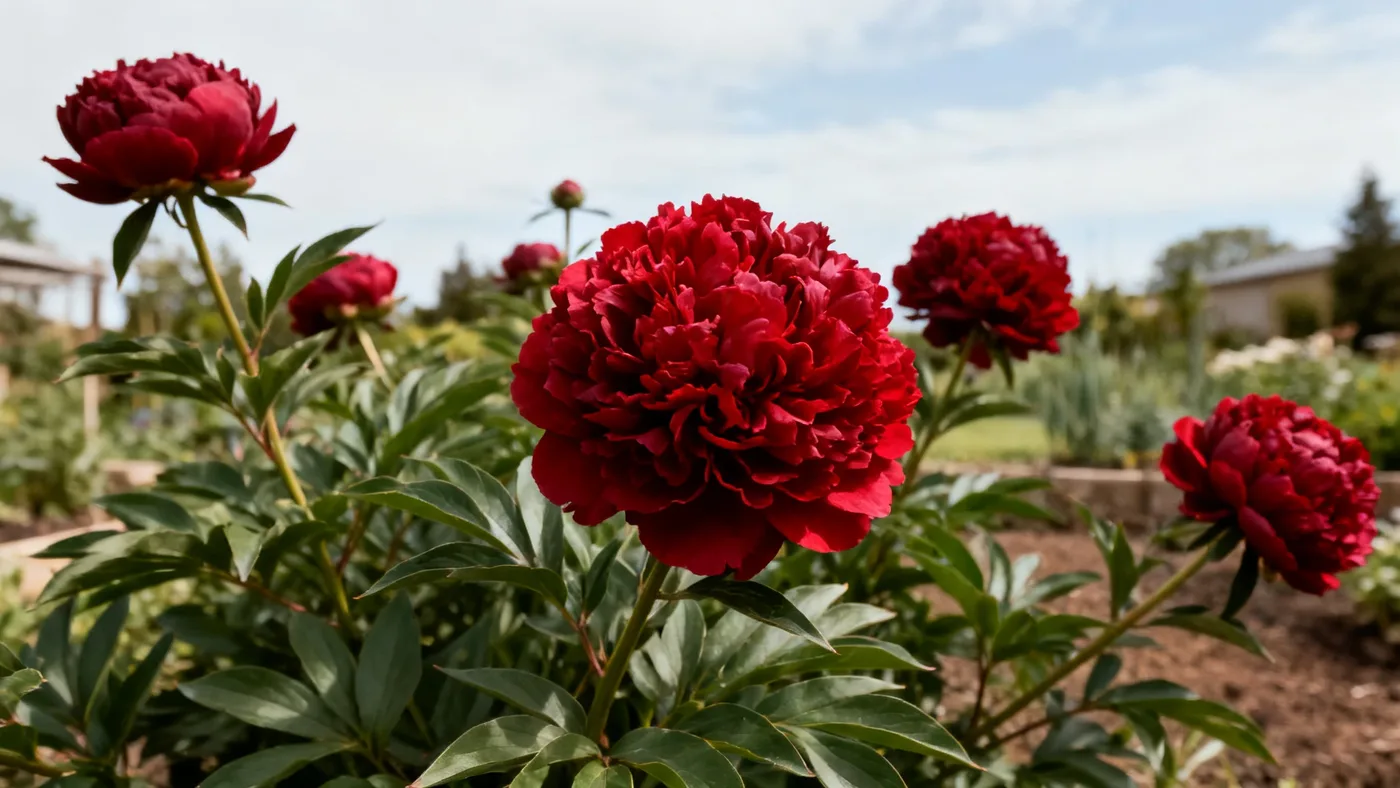
Why Isn't My Kansas Peony Blooming? Common Causes and Fixes
A mature Kansas Peony should produce abundant deep red double blooms each late spring. If your plant is leafing out but delivering no flowers, or if buds form and drop before opening, something is blocking bloom production. The good news: most causes are fixable once you know what to look for.
Kansas Peonies typically need 3 to 4 years from planting to reach full flowering potential. But even established plants may stop blooming if a key growing condition shifts. This guide walks you through the most common culprits and how to restore blooms to your garden.
Cause 1: Planting Too Deep
The single most common reason a peony refuses to bloom is being planted too deep. The crown (the knobby part where shoots emerge) must sit close to the soil surface. If buried too far down, the plant wastes energy reaching up instead of producing flowers.
When you plant a bare-root division, the eyes (buds on the crown) should sit no more than 1 to 2 inches below the soil surface. Going deeper than this blocks bloom initiation. Even a division planted 3 inches deep will struggle for years before producing reliable flowers.
Dig down around the base of your plant. If the crown sits more than 1 to 2 inches under soil, the plant is planted too deep and needs correction. This is worth fixing because a properly positioned plant will reward you with years of blooms.
Cause 2: Insufficient Sunlight
Kansas Peony demands full sun to produce flowers. The plant requires at least 6 hours of direct sun daily, ideally more. In zones 7 and 8 (hot southern regions), light afternoon shade helps prevent stress, but even then the plant must get strong morning sun.
More shade than 6 hours daily causes three problems: fewer flower buds form, stems become weaker and floppy, and overall plant vigor declines. A plant in partial shade will continue growing but rarely bloom reliably.
Examine your peony's location at sunrise, midday, and late afternoon. If trees, buildings, or structures shade the plant during mid-morning to mid-afternoon, it's not getting enough sun. Consider removing lower branches on nearby trees or moving the plant to an open spot if possible.
Cause 3: Poor Drainage and Waterlogging
Kansas Peony will not tolerate waterlogged soil. The plant requires fertile, humus-rich, well-drained loam. Soil that stays wet blocks root respiration and sets the stage for root rot diseases, particularly phytophthora blight. Roots suffocate, the plant weakens, and blooming stops.
Clay-heavy soil or low-lying spots where water pools after rain are problem areas. Even over-watering in the growing season can cause issues. During the first 1 to 2 years after planting, regular watering is necessary to establish the root system. After that, the plant becomes moderately drought tolerant and needs little supplemental water in most climates.
Check whether your peony sits in a depression or low spot. After heavy rain, does water pool around the crown? If so, amend the planting area with compost and consider raising the mound around the plant to improve drainage.
Cause 4: Excess Nitrogen Fertilizer
Too much nitrogen creates a peony that produces lush foliage but few or no flowers. Nitrogen promotes leafy growth at the expense of blooms. Heavy feeding with high-nitrogen fertilizers (or overuse of fresh manure) pushes the plant to prioritize stems and leaves instead of flower buds.
Use a low-nitrogen, phosphorus and potassium-leaning fertilizer, or balanced organic compost, applied lightly in early spring as shoots emerge. A single light application is enough. More fertilizer than that risks promoting floppy growth and reduced flowering.
If your peony is surrounded by lawn that receives regular nitrogen fertilizer applications, overspray can feed the peony excessively. If you've been fertilizing heavily, stop and allow the plant a full season without added nitrogen. Focus on phosphorus and potassium instead, which support blooming.
Cause 5: Bud Blast (Buds Form but Drop)
If your Kansas Peony forms buds but they fall before opening, the culprit is usually botrytis blight, a gray mold fungus that destroys developing buds. Cold, wet spring weather and poor air circulation create ideal conditions for this disease.
Botrytis appears as gray fuzz on buds or flowers and causes them to wither and drop. The disease also infects the crown and stems, creating brown spots and rot. Damp foliage overnight encourages spore germination.
To prevent bud blast, ensure good air circulation by spacing plants 3 feet apart (30 to 36 inches) and pruning back neighboring plants. Avoid overhead watering; water at the soil surface instead. In late fall, after frost kills back the foliage, cut all stems down to a few inches above ground. This removes overwintering spores that trigger spring infection. Sanitary cleanup of fallen leaves and debris around the plant is essential.
If bud blast strikes during the season, remove affected buds and stems and discard them (not in compost). Improve air flow immediately.
Cause 6: Poor Air Circulation
Crowded planting, proximity to walls or fences, or overgrown neighboring plants trap moisture around the foliage. Wet leaves and stems invite fungal disease, including the bud blast mentioned above. Additionally, humid, stagnant air weakens the plant overall and reduces blooming vigor.
Kansas Peonies spaced too closely together (less than 3 feet apart) compete for nutrients and light, and their foliage dries slowly after rain or watering. Thin out surrounding vegetation and ensure the plant receives breeze from multiple directions.
Cause 7: Young Plant (Still Establishing)
A Kansas Peony planted 1 to 2 years ago may produce only a few scattered blooms or none at all. This is normal. The plant is investing energy in establishing roots. It typically takes 3 to 4 years to reach full clump size and reliable flowering. Patience is required.
During the first 1 to 2 years, focus on regular watering to establish the root system and keeping the planting area free of weeds and competing plants. Once the plant enters years 3 and 4, blooming intensifies each season.
Cause 8: Incorrect Pruning or Winter Damage
Peony foliage should be cut back to a few inches above ground in late fall after frost kills it back. Cutting too early in fall removes healthy foliage the plant needs to store energy in the roots. Cutting off emerging shoots in spring destroys potential bloom buds before they develop.
Never cut back the foliage during the growing season except to remove diseased or dead tissue. The plant needs that green material to make food and build flower buds for next spring.
What You'll Need to Diagnose and Fix Blooming Issues
- A garden spade or trowel to check planting depth
- A measuring tape or ruler
- Compost or peat moss (if amending soil or raising the mound)
- A balanced or phosphorus-rich fertilizer (not high-nitrogen)
- Clean hand pruners for removing diseased buds or foliage
- A garden hose or soaker system for watering
- Gloves and a watertight container for removing diseased plant material
Step-by-Step Diagnosis and Fix
- Check planting depth. Carefully dig down 4 to 6 inches around the peony crown (the knobby base). If the eyes sit more than 1 to 2 inches below soil, the plant is too deep. If this is the issue, you can carefully bare the crown and raise the soil level, but this is best done in fall.
- Assess sunlight. Stand in the planting area at sunrise, 10 a.m., noon, and 3 p.m. Count hours of direct sun. If fewer than 6 hours reach the plant, this is a contributing cause. Plan to remove nearby shade-casting plants or relocate the peony in fall.
- Test soil drainage. Dig a hole 1 foot deep in the root zone. Fill it with water. If water drains within 24 hours, drainage is acceptable. If it pools longer, amend the soil with 3 to 4 inches of compost worked in, or raise the planting mound.
- Check soil pH. Ideally, Kansas Peony grows in soil with a pH between 6.5 and 7.0 (slightly acidic to neutral). A soil test kit from a garden center or your local extension service confirms this. Adjust if needed according to the test results.
- Review fertilizer use. Stop applying high-nitrogen fertilizers. If you've been feeding heavily, allow a full season without added nitrogen. In early spring of the next growing season, apply only a light, balanced fertilizer or compost as the shoots emerge.
- Improve air circulation. Space other plants at least 3 feet away. If the peony is crowded by neighboring shrubs or perennials, thin them or move them. Ensure the plant receives air movement from multiple directions.
- Check for bud blast or disease. Inspect emerging buds closely. Gray fuzz, brown spots, or withered tissue indicate fungal disease. Remove affected buds and stems immediately and discard them. In fall, cut all foliage down and remove it to eliminate overwintering spores.
- Water wisely. During the first 1 to 2 years, water regularly to establish roots. After that, reduce watering unless your region experiences drought. Always water at soil level, never overhead.
Tips and Common Mistakes
- Don't assume a young plant should bloom heavily. First-year and second-year plants are establishing, not blooming. Wait until year 3 to judge flowering performance.
- Avoid planting bare-root divisions in spring. Fall is preferred because it allows roots to establish before cold weather. Spring planting is possible with container-grown plants, but bare-root divisions are at risk of drying out or failing to root in time for blooming.
- Don't overhead water. Wet foliage invites fungal disease. Use a soaker hose or drip irrigation at soil level instead.
- Never use fresh manure around peonies. It introduces excess nitrogen and can introduce disease. Use well-composted manure or balanced compost only.
- Don't cut foliage early in fall. Premature cutting reduces energy storage. Always wait until frost kills the leaves back naturally.
- Spacing matters. Plant multiple peonies 3 feet apart for good air circulation. Closer spacing increases disease risk and reduces blooming.
Expected Results and Timeline
Once you correct the underlying issue, improvement typically appears in the next growing season, though some fixes take longer. A plant planted too deep that you re-level in fall may begin blooming more reliably by the following spring. A young plant naturally begins heavy blooming in its third and fourth year.
If you improve drainage, sunlight, air circulation, and fertilizer use in this season, expect more buds to form next spring. Bud blast management requires vigilance: consistent fall cleanup, pruning, and good air flow may take a full year or two to eliminate the disease pressure, but results compound with each season.
For detailed care guidance, see our complete Kansas Peony growing guide, which covers planting, watering, feeding, and seasonal maintenance in full.
Quick Reference: Blooming Troubleshooting Checklist
| Problem | Primary Cause | Quick Fix | Timeline |
|---|---|---|---|
| No buds at all | Planting too deep, insufficient sun, or young plant | Check crown depth (should be 1-2 in below soil); ensure 6+ hours sun; if under 3 years old, wait | Next season (or 1-2 more years for young plants) |
| Buds form then drop | Botrytis blight or moisture stress | Improve air circulation; remove affected buds; cut foliage back in late fall | This season and next |
| Lots of leaves, few blooms | Excess nitrogen or shade | Stop high-nitrogen fertilizer; verify 6+ hours direct sun | Next season |
| Weak, floppy stems with few blooms | Poor air circulation, too much shade, or excess nitrogen | Space 3 feet apart; thin nearby plants; reduce fertilizer; add support stakes if needed | Next season |
| Soggy soil around roots | Poor drainage or overwatering | Amend soil with compost; raise planting mound; switch to soaker irrigation | Next season |