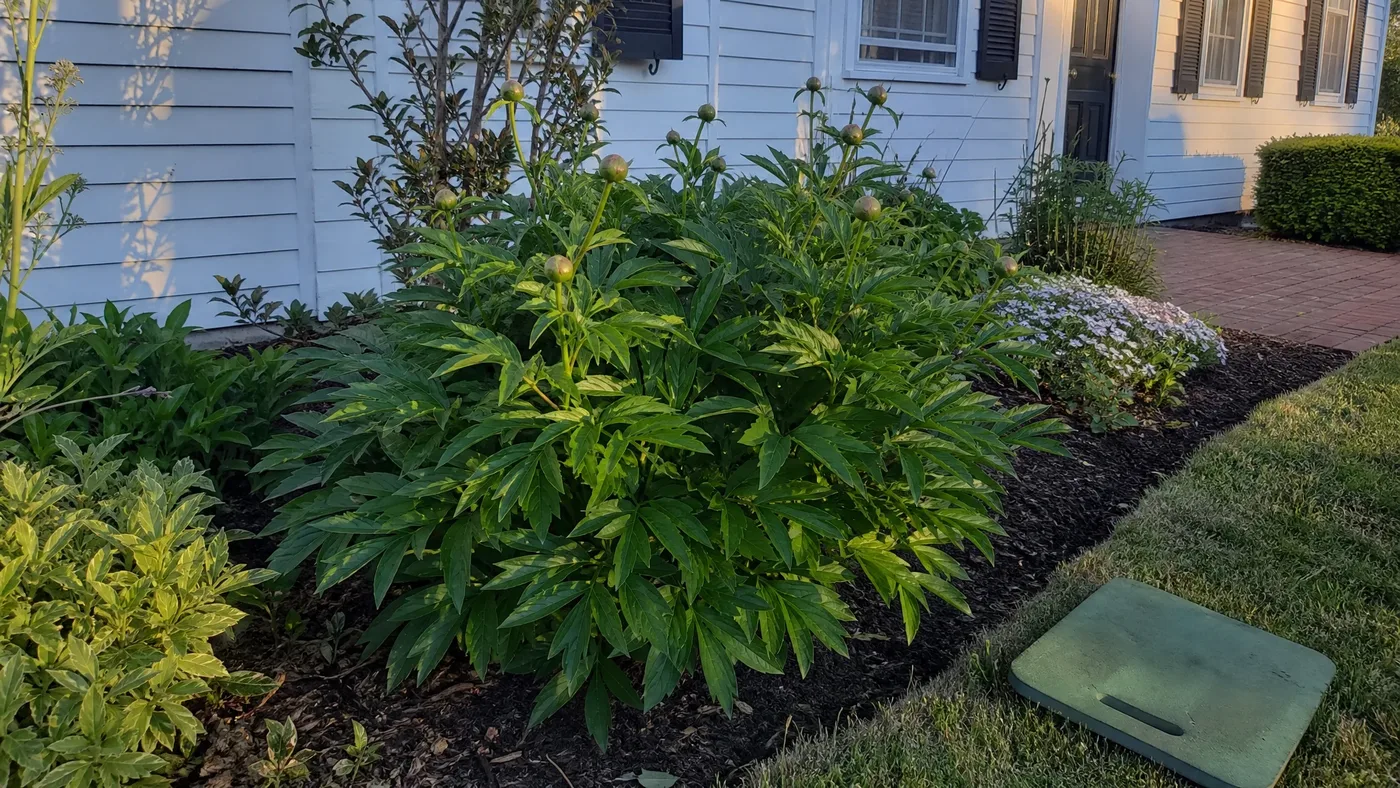
Growing Kansas Peony in Missouri and the Kansas City Area
Here is the planting-day ledger from four yards across the Kansas City metro. A narrow side bed beside a fence had to solve airflow. A corner lot open to every spring storm had to solve wind. A clay backyard slope had to solve standing water. A pot on a hot deck had to solve afternoon heat. It was the same Kansas Peony in every yard, with four different problems to settle before the first shovel went in.
Peonies do grow in Missouri, and Kansas City is good peony country, because this plant needs a real winter to set its buds. The trouble comes later, when humid, stormy springs invite botrytis and bud blast. This article talks about how Kansas Peony handles Missouri weather, the four yard situations above and a local planting sequence, and answers the questions customers ask us most. Read on to learn which case matches your yard and what to do first.
Missouri Weather Kansas Peony Has to Survive
A fat bud in late April, followed by three days of warm rain, tells you most of what the metro asks of this plant. The cold months give Kansas Peony everything it needs to set flower buds for the next year. The wet, windy weeks of spring are where it gets tested, and that is the part you can do something about.
What the Cold Does for the Buds
Kansas needs cold winters to set buds, and Kansas City and most of Missouri provide them. Herbaceous peonies are hardy in zones 3–8, doing best in zones 5–7, and most can be grown in zones 3 through 7. Look up your zone and compare. Metro yards sit well inside that range, so hardiness is rarely the question here.
That is also why we steer people away from pampering the plant through the cold. A peony that never chills is a peony that sulks, and Missouri does not have that problem.
Why Wet Springs Cause the Trouble
Warm, wet, stormy weather favors botrytis, which shows up as brown, collapsing buds and blackened stems, and it favors bud blast, where buds stall and never open. Powdery mildew can follow in summer. None of this is a reason to skip the plant. It is a reason to choose a site with moving air and to keep the bed clean. Our guide to Kansas Peony pests and diseases covers the symptoms in detail.
One of the most common questions we get is whether a Missouri summer will kill a peony. Heat rarely finishes an established clump. Wet, crowded, shaded springs do far more damage.
Three Habits That Apply Everywhere
Whatever your situation, the weather points to the same three habits:
- Give every plant room and open air so foliage dries quickly after rain.
- Plant the crown shallow, because deep crowns sulk and skip bloom.
- Clear dead foliage in fall so disease has nowhere to winter over.
The four yards below apply those habits differently, so read the one that sounds most like yours first.
The Narrow Side Bed by the Fence
Picture a bed three feet deep between a wooden fence and a walk, sunny from mid-morning until the house throws its shadow across it. This is the most common yard we hear about, and the answer is to plant less, not more.
The Missouri extension says peonies should be planted 3–4 feet apart in fertile loam with full sun, and it names too much shade as a key reason peonies fail to flower. A mature Kansas runs about 20–39 inches tall and wide, so in a strip this narrow you are planting a single clump, or a short row with generous gaps, not a hedge. Give it the room now and it will fill the space within a few years without choking itself.
Sun Hours Decide Where the Clump Goes
Kansas does best in full sun but tolerates partial shade, which is more forgiving than the extension advice. A bright shaded edge keeps the plant alive, but bloom suffers as the sun hours drop. Before you dig, watch the strip on a clear day and mark where light lasts longest. Plant there, even if it is not the tidiest spot. Our sun requirements guide goes deeper on the tradeoff.
Keep the Fence From Trapping Moisture
A fence blocks wind, which sounds helpful until a humid spring leaves the foliage wet all morning. Set the crown toward the open walk side of the bed, not hard against the boards. Do not fill the gap with a second shrub or a low edging plant that touches the leaves. Leave bare mulch between plants for the first few years.
Expect the clump to look small at first. Kansas takes 2–5 years to reach maturity, and a narrow bed is a good place to be patient, because nothing around it needs to be moved later.
Before you plant, run through this short checklist:
- Mark the sunniest point of the strip and center the crown there.
- Keep the plant off the fence line so air moves behind it.
- Skip groundcovers that crowd the base.
- Pick a single plant over two squeezed in.
Kansas Peony on a Windy Corner Lot
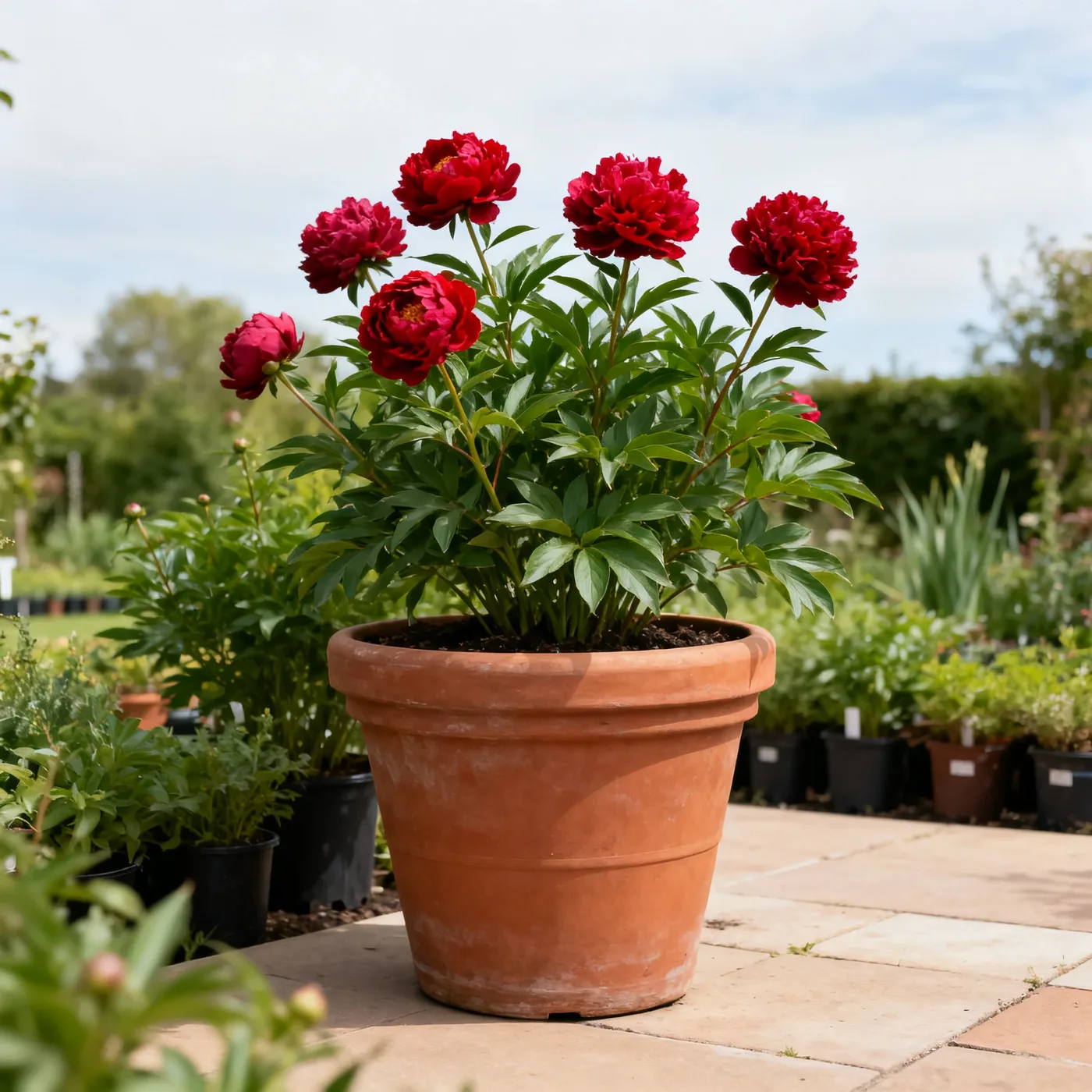
A corner lot has no windbreak, so the first big May storm arrives at full strength. We often see the same picture afterward: a double red flower, heavy with rain, flat on the mulch. Kansas is a fully double, bright clear red that fades very little. All that petal weight is the reason it needs help standing.
Stake Before You Need To
Put a ring or grid support over the clump in early spring, when the red shoots are only a few inches high. The stems grow up through it and hide it. Staking after the buds fatten means tying bent stems, and a stem bent once rarely recovers. Kansas is a compact peony, so the support does not need to be tall. It needs to catch the flowers.
Site for Shelter Without Smothering
Plant on the lee side of the house, a garage wall or a sturdy hedge, but leave real space between the plant and whatever shelters it. A solid wall that cuts off all breeze brings back the botrytis problem from the first section. A picket fence, an open shrub border or a trellis slows gusts and still lets air through.
Keep full sun in mind, too. The windiest corner is often the sunniest, which suits the plant, so shelter it with distance, not with shade.
Cut Ahead of the Storm
If the forecast turns ugly while buds are showing color, cut a few stems and bring them inside. Cutting is the cottage gardener's insurance, and it gives you a vase of blooms either way. Each plant blooms about two weeks, so a flattened clump costs you much of the show.
Planting Kansas Peony on a Heavy Clay Slope
A backyard slope with orange-brown clay can hold water in a pocket of soil like a bowl, even though the hill itself looks like it drains. The ground sheds a downpour in the morning, yet the planting hole is still full two days later. That is exactly the situation where a peony crown rots.
Kansas wants deep, fertile, humus-rich soil that is moist but well drained. Clay gives you the deep and fertile part. You supply the drainage. Our soil guide covers amendments, and Kansas tolerates acid, alkaline or neutral soil, so you do not need to chase a pH number here.
Plant Sequence for Clay
Work through the steps in this order:
- Choose the upper third of the slope, not the base, where runoff gathers.
- Loosen a wide patch with a garden fork, not just a narrow hole, so water has no clay-walled pot to sit in.
- Mound the loosened soil into a low raised area and plant into the top of it.
- Set the crown so the growing points sit no deeper than 2 inches, since the Missouri extension warns that deeper planting reduces or inhibits flowering.
- Water once to settle the soil, then re-check the depth, because mounded soil sinks.
- Mulch the bed but keep it off the crown.
Rot Prevention After Planting
Clay stays wet long after sandy soil dries, so hold back on watering. Check by pushing a finger down a few inches and watering only when it feels dry. On a slope, shape a shallow lip on the downhill side so rain soaks in instead of racing past the plant. See our guide to watering Kansas Peony for the rhythm.
Re-check the crown depth each fall for the first couple of years. Settling soil is the quiet way a correctly planted peony ends up too deep, and the fix is simply to pull a little soil back from the growing points.
A Kansas Peony Pot on a Hot Deck
A south-facing deck in July can feel like an oven by 3 p.m., and a pot sitting on it heats from every side. A container is still a sound choice for Kansas, especially if the yard has no good soil. It just asks for more attention than any of the beds above.
Pot Size and Placement
Choose the largest pot you can move, with a drainage hole and enough depth for the roots to spread, because the clump reaches about 20–39 inches across at maturity. Fill it with a loose, humus-rich mix. Light-colored pots stay cooler than dark ones. Place the pot where it gets full morning sun and some relief from the hottest afternoon hours, such as on the east side of the deck, since Kansas accepts partial shade.
Watering in Heat
The soil should stay moist but never soggy. In a hot spell you will check often, and a pot can dry out much faster than a bed. Water deeply, let the excess drain and never leave the pot standing in a saucer of water. In our rows, the clumps that struggle in containers are almost always the ones that got watered on a schedule instead of by feel.
Keeping Pot Roots Through the Cold
Kansas needs its chill, so do not bring the pot into a warm room. Roots in a pot are exposed to cold air on every side, which is harder on them than ground soil. Move the pot against the house wall, group it with others, or sink it in a bed, and keep it where rain does not leave it waterlogged. Check with your local extension service for the right level of protection in your zone.
Expect patience here as well. A potted clump takes its time, and a pot that is too small will slow it further, so size up rather than down.
Four Yards, One Planting Calendar
Every yard above follows the same local sequence, with a few adjustments. Fall is the season we recommend for planting in the metro, because roots establish while the soil is still warm and the plant then gets its winter chill. For a full walk-through of the process, see how to plant Kansas Peony for the best spring blooms. Check your own frost dates with your county extension office before you commit to a day.
The table below gives the sequence and notes which yard needs each step most.
| When | What to do | Yard that needs it most |
|---|---|---|
| Early fall | Prepare the planting spot and set the crown no more than 2 inches deep | Clay slope |
| Late fall | Mulch beds, move pots to shelter and cut back dead foliage | Deck pot |
| Early spring | Set support rings while shoots are only a few inches tall | Windy corner |
| Spring growth | Check airflow, thin crowding plants and watch for brown buds | Side bed |
| Bloom | Cut stems ahead of storms and remove spent flowers as they fade | Windy corner |
Fall cutback matters in all four. Remove dead flowers as they fade, then cut back as the foliage dies down in autumn. That one habit takes away much of what botrytis and mildew need to carry over the winter.
Planting Kansas Peony Once for Decades in Missouri
Missouri and the Kansas City metro give Kansas Peony the winters it needs, so the work is managing the spring: air, support, drainage and shallow planting. Do that and a single clump pays you back for decades, with double red flowers for the vase every year and a long wait for the first bloom that you will forget the moment it opens. Find the case closest to your yard and follow that sequence.
Kansas Peony
Nursery-grown Kansas Peony in sizes from #2, shipped to your door.
From $74.60
Shop Now →Kansas Peony has sun all day and deep, well-drained soil on our farms, a setup that suits a bed in a Missouri or Kansas City yard. We are a small grower-run business, so the only plants we ship are ones we would put in our own ground. If you would like to start a clump that will outlast the planning, see the plants we have ready.