Is Kansas Peony a Perennial? Lifespan and Yearly Return
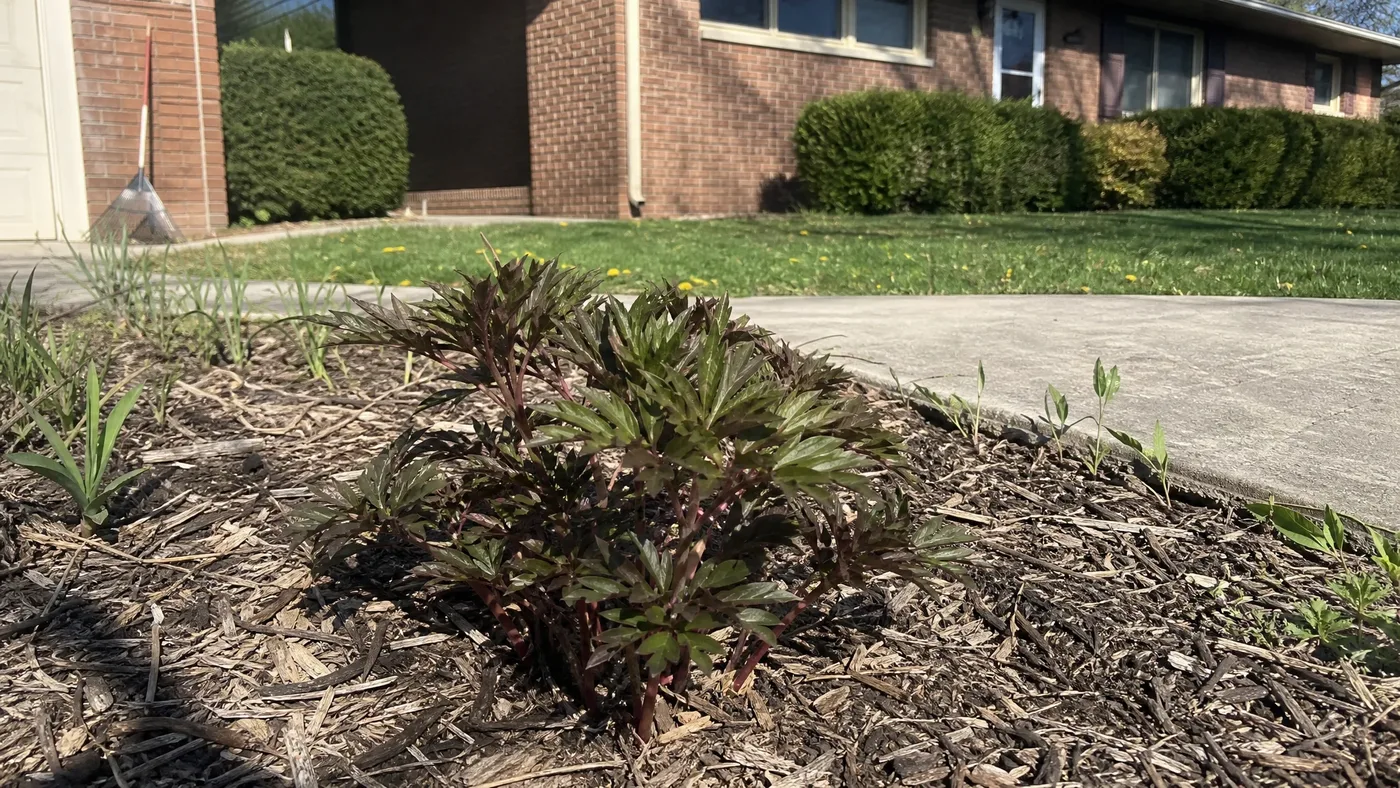
Many people assume a plant that vanishes every fall has died. One November in our rows we stood over a bare patch where a Kansas Peony had been and nearly wrote it off, and then in April the red shoots pushed up through the cold soil as if nothing had happened.
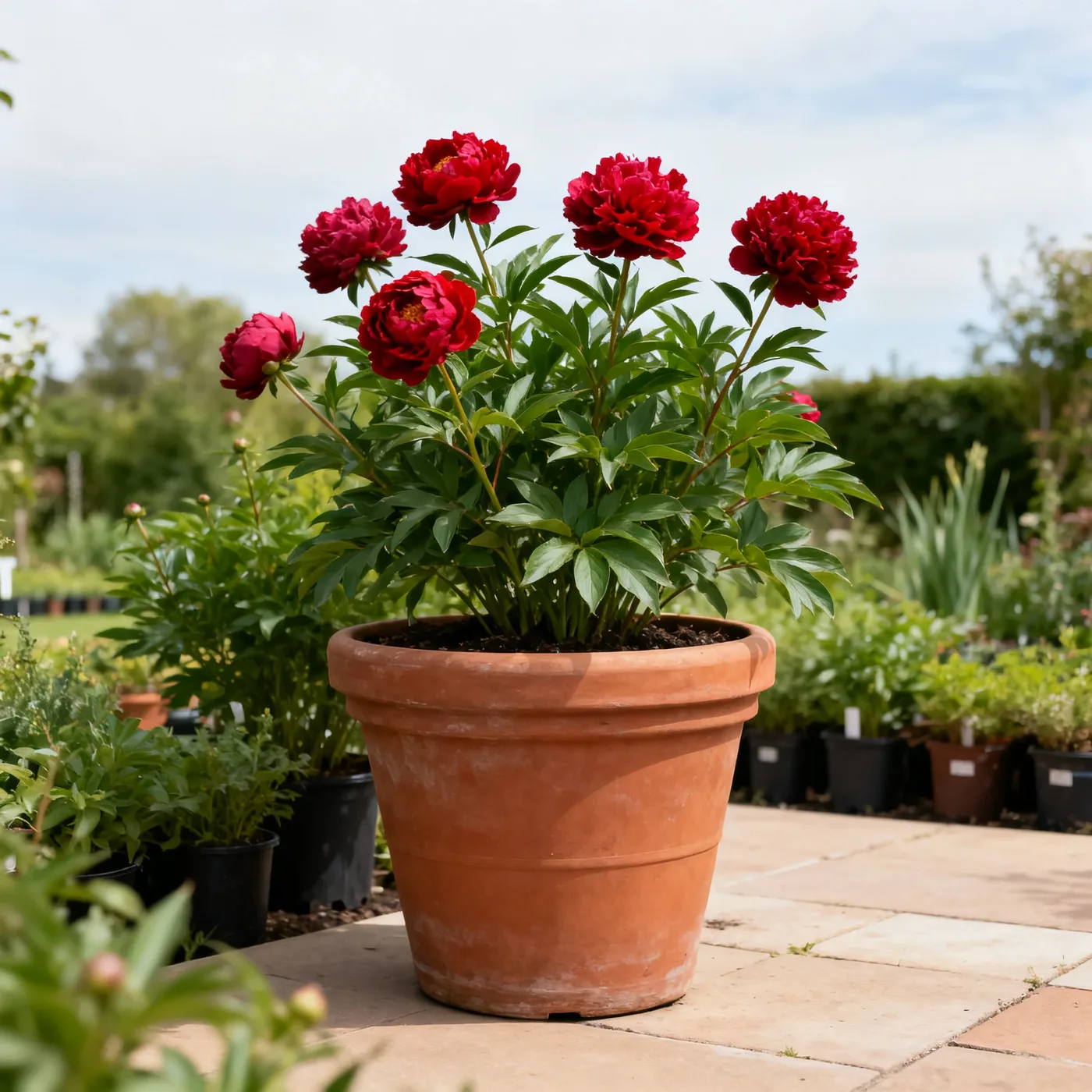
The plant was simply resting. Kansas is an herbaceous Paeonia lactiflora, a true perennial, and the same roots send up fresh growth every spring for a very long time, a little larger with each return.
We'll walk you through what to know before you buy, then the first weeks and the quiet first year, then the second spring when the first real flowers open, and finally the long settled years and the signs that separate real decline from an ordinary off year.
What to Know Before Buying Kansas Peony
Kansas Peony is a perennial, and a generous one. It is an herbaceous peony, which means the stems and leaves die to the ground in the winter and regrow from a stout underground root system. What looks like a loss in November is only the plant going to sleep, and you plant it once.
The flowers are double and a bright, clear red, and the color fades very little. The plant stands roughly 20–39 inches tall and about as wide at maturity, with dark green, divided foliage that stays handsome long after the blooms are gone. It is a dependable red for the border and for the vase.
Herbaceous peonies do best in zones 5–7 but can grow in zones 3–8, so a cold winter is part of the plan rather than a risk. Most of them fall in zones 3 through 7, so if you garden at the warm edge of the range, ask your local extension service how peonies behave in your area.
The one thing to settle before you buy is your patience. A peony asks for a few quiet years before it gives its full show, and that wait is the price of a plant that then stays for decades. Our guide on what to look for before you order covers choosing a good plant, and our plants are grown to be set out once and left alone.
The First Weeks After Planting Kansas Peony
The first weeks are the part that tests your nerve. Planting is where nearly all the work happens, and afterward the plant does almost nothing you can see. Depending on when you set it out, you may watch a few small shoots appear or nothing at all, because the roots are settling in before the top has anything to say.
Quiet is the plan. Kansas wants soil that is moist but well drained, so water to keep the ground evenly damp and then step back. A plant that is fussed over in its first weeks tends to sulk longer than one left in peace.
These are the things that look wrong in the first weeks and are not:
- Bare ground where you planted, with no growth at all, which only means the roots are working below the surface.
- Small, dark red shoots that seem slow to unfold, since peony shoots start out reddish and take their time opening into leaves.
- A few limp or ragged leaves on a young shoot, which usually settles once the roots take hold.
- No flower buds anywhere, which is normal and which we come back to in the first-year section.
The one worry worth acting on is depth. Peonies often fail to bloom satisfactorily if the buds are more than 2 inches deep, so a plant set too low can look healthy for years and never flower. Our guide to planting Kansas Peony for the best spring blooms shows how to set it at the right level the first time.
A Quiet First Year Above Ground
The first year above ground is modest by design. You can expect a handful of stems carrying dark green, divided leaves, and a clump well short of its mature 20–39 inches. Most of the growth that matters is happening underground, where the roots are thickening for the years ahead.
Kansas takes 2–5 years to reach maturity, a range that surprises people who expect a finished plant in one season. Think of the first year as a deposit. Nothing shows on the statement yet, but the balance is building.
If a flower bud does form, pinch it off so the plant spends its strength on roots rather than on one early bloom. That feels wrong to most people holding a bud in their fingers, but a young clump that is allowed to build will flower far better in the seasons that follow.
As autumn comes, the foliage yellows and collapses, and that is your cue to tidy up. Cut the plant back as the foliage dies down, and our guide to pruning Kansas Peony covers the cut in detail. Mark the spot with a stake before winter, because bare ground in a cold month is exactly when a sleeping peony gets dug up by accident.
The Second Spring and the First Real Bloom
The second spring is the turning point. The red shoots return thicker and more numerous than the year before, and the clump begins to look like a plant rather than a promise. Some second-year plants carry a few blooms and some hold off another season, and neither one is a cause for worry.
Kansas flowers from late spring to early summer, and each plant blooms for about two weeks. The flowers are fully double, bright clear red, and they hold their color rather than washing out. Cut a stem or two for a vase and the cottage garden comes indoors, though with a young plant it is best to take few so the clump keeps leaf to feed its roots.
One of the most common questions we get is why the second spring brought three flowers when the photo showed thirty. A young clump flowers lightly and builds toward the full display over those two to five years. If the third spring still brings nothing, our guide on why a Kansas Peony isn't blooming walks through the usual causes.
Double flowers are heavy, and wet weather can bow the stems toward the ground. A simple support ring set around the shoots early in spring, before the leaves close over it, keeps the blooms upright without any visible effort later.
Kansas Peony in Its Established Years
A mature clump settles into a rhythm that you can set your calendar by. The cycle repeats so reliably that the real skill, after the early years, is mostly knowing what to leave alone.
The Yearly Cycle of a Settled Clump
Red shoots break the soil in early spring and unfold into dark green, divided foliage. Flowers open from late spring into early summer, and spent blooms come off as they fade. The leaves then carry the plant through summer, feeding the roots for next year, and in autumn they die down and are cut back for winter.
Through all of this the clump slowly widens, heading toward the upper end of its 20–39 inch spread. It rarely needs more than a clean cut in fall and a little attention in spring.
How Many Years Kansas Peony Lasts
Longevity is the main reason to plant this one. The University of Missouri notes that peonies can often remain undisturbed for 20 or more years without a decline in flowering, and it adds that vigorous plants have stayed in one spot for well over 50 years. The University of Arkansas goes further and says a peony can persist for 100 years or more.
You may read that perennials need dividing every few years, but peonies are the exception. Wisconsin's extension service says they do not require regular division, and Arkansas advises dividing only to pass a piece on to another gardener. Otherwise, as it puts it, leave them be.
Recognizing Decline in an Aging Kansas Peony
Even a long-lived clump has a bad year now and then, and the trick is telling a passing setback from a real slide. A single thin season is almost never the end. What matters is the direction over several springs, not the result of one.
The table below sets common signs against what they usually mean.
| What you see | What it usually means |
|---|---|
| Fewer flowers for one year | A normal off year, often tied to a hard spring or a wet stretch |
| Powdery mildew on leaves late in summer | Common on many cultivars, so clean up diseased leaves and carry on |
| Flowers shrinking year after year | Early decline, so check for new shade, crowding or deep planting |
| Short, thin shoots each spring | A tired clump that may be ready for division |
| No shoots at all after a winter | Serious trouble, so dig carefully and check the roots |
In our rows, we usually find shade or planting depth before we find old age. A tree that has grown up over the years, or a bed that has been mulched over the buds, can look exactly like a plant wearing out. Rule those out first.
The Missouri extension reserves division for when growth is poor and plants fail to bloom after years of performing well. If that is your clump, our step-by-step guide to propagating Kansas Peony by division shows how to renew it and keep the best pieces going for another long stretch.
Decades of Return From One Kansas Peony Clump
Kansas Peony is a perennial in the fullest sense. It disappears every fall, comes back from the same roots every spring, and gives you little at first and more with every year. The wait for the first bloom is real, but it is short beside the decades the clump then spends repaying it, and your job over those years is mostly to keep it in sun, keep the buds near the surface and leave it alone.
Some springs from now, you will walk out to the same spot, and the same clump will be coming up red through the soil, a little larger than the last time, long after you have stopped counting the years.
Kansas Peony
Nursery-grown Kansas Peony in sizes from #2, shipped to your door.
From $74.60
Shop Now →Deep, fertile soil that drains freely and sun from morning to dusk are what Kansas gets on our farms, and it is the setup we trust to bring a clump back year after year. We are a small business that grows its own stock, so the top-quality plants we send out are ones we raised ourselves. If you want a peony that returns every spring, browse what is in stock now.