Kansas Peony Origin: The 1940 Introduction and Its Name
A cultivar name is a label that a breeder or introducer attaches to one specific plant lineage, and the word "Kansas" on a tag says nothing about geography. It identifies one peony the way a model name identifies one design from one maker. We saw this again in our rows this season, when several customers walking past the red blooms asked whether this was the peony native to the state. It is not, and the real story is more interesting.
Below, you'll find out all about where Kansas Peony came from, including what its 1940 introduction was, how a 1957 Gold Medal built its standing, how to tell it from look-alike reds, and what a mid-century cultivar means for your planting. Getting the name right matters because a peony stays in the ground for decades, and a mislabeled plant is a very long mistake.
Cultivar Names and What They Actually Label
Start with the vocabulary, because everything else in this story depends on it. A cultivar is a plant selected and kept in cultivation for a particular set of traits, and its name is the label given by the person who bred or introduced it. Think of a recipe title. "Grandmother's apple pie" tells you which recipe you are getting, not which town it was baked in.
That label is attached to a lineage, meaning one original plant and everything propagated from it. Peonies like this are multiplied by division, not grown from seed, so every Kansas Peony growing today is in effect a piece of that first seedling. This is why two plants bought years apart from different growers should bloom alike, and why a plant that blooms differently is a different plant under the wrong label.
Reading the Botanical Name
The full name is Paeonia lactiflora 'Kansas'. The first two words give the genus and species, the broad group. The word in single quotes is the cultivar, the specific lineage inside that group. When a seller writes only "Kansas peony" or only "red peony," information has been dropped that you may want later, so look for the quoted name on the tag.
Why Breeders Number Before They Name
Breeders do not name a plant the moment it blooms. Kansas first carried a seedling number, No. 2-35. A number is a working label for a plant under evaluation. A name comes once the breeder or introducer decides the plant is worth releasing, and from then on it is meant to stay with that lineage for good.
So the name labels the plant, not the place.
A Red Double Introduced in 1940
Kansas Peony reached gardeners in 1940, which makes it a mid-century classic and not a Victorian heirloom. It belongs to a later chapter of peony breeding than the oldest reds in the trade, and it was prized for a large bloom, a clean color and reliability. We do not name the introducer, so we will not guess at a name.
What Double Means Here
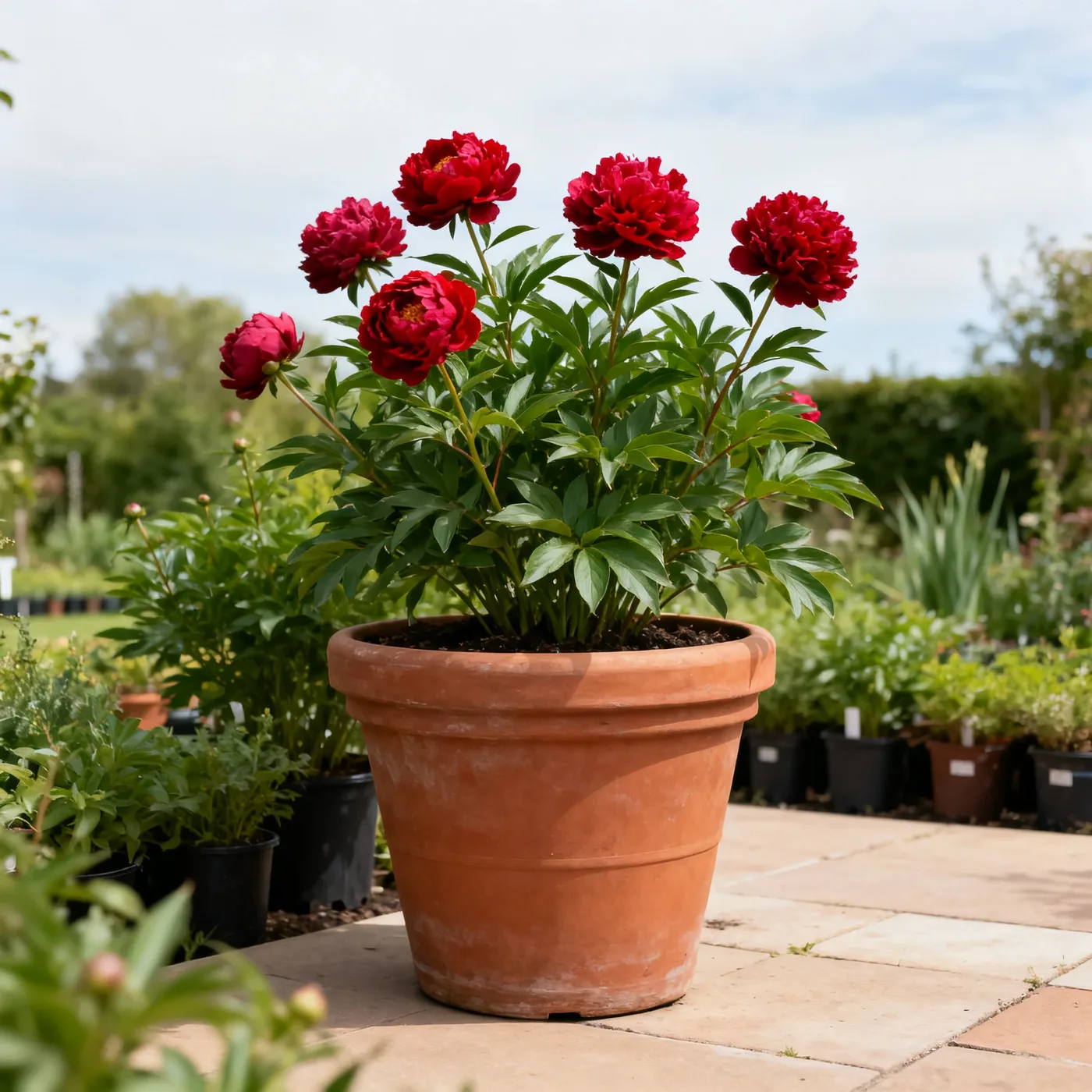
A double peony has so many petals that the center of the flower is filled in, with no open ring of petals around visible stamens. Kansas is double, bright clear red, containing almost no blue. That last detail is the key to the color. A red with almost no blue in it reads as a true, warm red and not a red leaning toward magenta, and it fades very little, if any.
Why Descriptions of the Color Differ
Descriptions of the shade can differ. Light, soil, the age of the bloom and the screen you view it on all push a color around, and our guide to what color Kansas Peony really is sorts out the range you may see in your own garden.
How Kansas Peony Earned Its Awards
Awards are how a cultivar moves from one breeder's field to a name on everyone's list. Kansas won a Gold Medal in 1957, seventeen years after its 1940 introduction. That gap tells you the medal did not launch the plant. It recognized one that gardeners had already been growing for most of two decades, which is a better sign than early hype.
Kansas also has a short reputation: a dependable bloomer every year, with buds that all open and color that carries better than most reds. Each of these points translates into something you will actually see, as the table shows.
| Reputation | What You See in the Garden |
|---|---|
| Dependable bloomer every year | A settled clump flowers each season, with no skipped years |
| Buds all open | Few buds stall, so the flush looks full |
| Color carries better than most reds | The red stays clear from a distance across the border |
| Fades very little, if any | Older blooms stay red and do not wash out |
Those traits matter to anyone who cuts flowers or plants for a bold border, since a red that browns or a bud that stalls ruins the display. Each plant blooms for about two weeks in late spring to early summer, so a cultivar that opens every bud makes the most of a short window.
A medal gets a plant noticed, but dependability keeps it on the list.
Kansas Peony Is Not the State Flower
The name is a borrowed label, not a statement of origin. Nothing in the sources we use ties this cultivar to the state of Kansas, and where the name came from is not something we will guess at. A peony cultivar is a named garden lineage, so it was never a wild plant belonging to any region. Searching for a "Kansas peony variety" sometimes leads people to expect a prairie wildflower, and that expectation can steer them wrong.
What Decides Where It Grows
Hardiness, not the name, tells you whether it will thrive for you. Herbaceous peonies do best in zones 5–7 but can grow in zones 3–8. That range covers the species group, so treat zone 8 as the edge and check with your local extension service for your county.
If you garden around Kansas City, our guide to growing Kansas Peony in Missouri and the Kansas City area covers local conditions. Gardeners in Vermont or Oregon can grow it just as well, because the plant answers to winter cold and soil drainage, not to its label.
Plant it for the climate you have, and ignore the geography in the name.
Telling Kansas Peony From Look-Alike Reds
Red double peonies are common, and sellers sometimes list a plant as "red peony" or "Kansas type" without the paperwork to back it up. One of the most common questions we get is how to be sure of what is in the pot. A bare root division shows no flower for years, so the proof has to come from documents first and the bloom later. These steps keep the name attached to the plant.
- Look for the full name, Paeonia lactiflora 'Kansas', on the tag or label, with the quoted cultivar name.
- Make sure the receipt or invoice names the cultivar and not just a color.
- If a listing says only "red" or "Kansas-type," ask the seller to confirm the cultivar in writing.
- Compare the first bloom with the traits in the table below before you decide the label was right.
Once flowers open, the traits below separate Kansas from other reds, so treat them as a guide and not a lab test.
| Trait | Kansas Peony | If Yours Differs |
|---|---|---|
| Flower form | Fully double, large bloom | A single or loose form points to another cultivar |
| Color | Bright clear red, almost no blue | A magenta or pink lean suggests a different plant |
| Fading | Very little, if any | Quick washing out is a red flag |
| Foliage | Dark green, divided | Pale or very different leaves deserve a closer look |
| Height | About 20–39 inches | A far taller plant after several years is worth questioning |
Karl Rosenfield is another widely grown red, and our comparison of Kansas Peony and Karl Rosenfield shows how to separate the two side by side. If you are still shopping, what to look for before you order Kansas Peony covers labels and root quality.
What an Old Cultivar Means for Your Planting
A cultivar that has been grown since 1940 comes with something new plants cannot offer: a long record. Gardeners have watched it perform through many seasons, so the surprises are mostly gone. That is the practical meaning of age. You are not trying out an untested plant, you are planting something whose habits are known, and your job is to give it the conditions it has always wanted and then wait.
Plan for the Wait
Kansas takes two to five years to reach maturity. In our rows, a new division often spends its first seasons building roots while blooms stay few or absent, and that is normal. The reward is a clump that returns for decades, which is why peonies suit people who plant once and expect to enjoy the garden long after.
What to Give It
The cultivar points to a short list of needs:
- Expect a clump about 20 to 39 inches tall and about as wide, with dark green, divided foliage.
- Choose full sun or partial shade, and plan on deep, fertile, humus-rich soil that is moist but well drained.
- It tolerates acid, alkaline or neutral soil, so you do not need to chase a precise pH.
- Remove spent flowers as they fade, then cut it back as the foliage dies down in autumn.
- Powdery mildew can affect many cultivars, so remove and destroy dead, diseased leaves.
Our complete Kansas Peony care guide carries these points into a year-round routine.
Kansas Peony Carries Its History Into Your Garden
What you hold when you buy Kansas Peony is a lineage, not a place. It began as seedling 2-35, was introduced in 1940 as a bright clear red double, and won a Gold Medal in 1957 by being dependable year after year. The name belongs to the plant, so check the tag and receipt to confirm it, and let the zone and soil decide where it grows.
Plant it once, give it the patience the first few seasons ask for, and it will repay you for decades. Keep the original tag or receipt with the planting date, so the plant's name stays attached to it for the next owner.
Kansas Peony
Nursery-grown Kansas Peony in sizes from #2, shipped to your door.
From $74.60
Shop Now →Our growers watch Kansas Peony through the year, from the first spring growth to bloom in late spring and the cutting back in autumn, in deep, fertile, well-drained soil and full sun on our farms. We are a small business of growers who raise every plant we sell, so the name on the tag is the plant in the pot. If you want a Kansas with its name attached, start with one of ours.