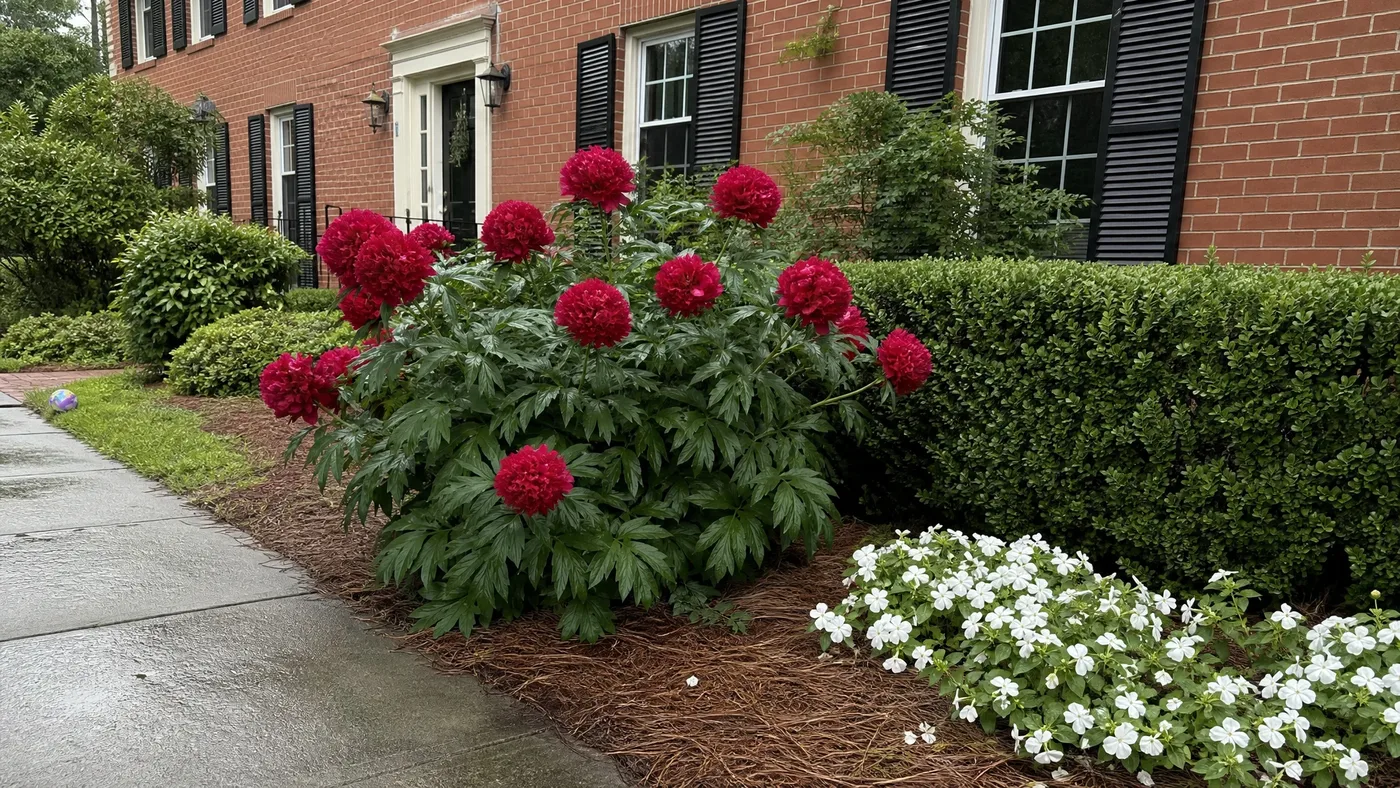
What Color Is Kansas Peony? Red, Magenta or Hot Pink
Watch one Kansas peony from dawn to dusk and it will change its name three times. At first light the double bloom reads as crimson, by noon it has turned cherry, and in evening shade it slips toward fuchsia. It is no wonder sellers cannot agree on a label.
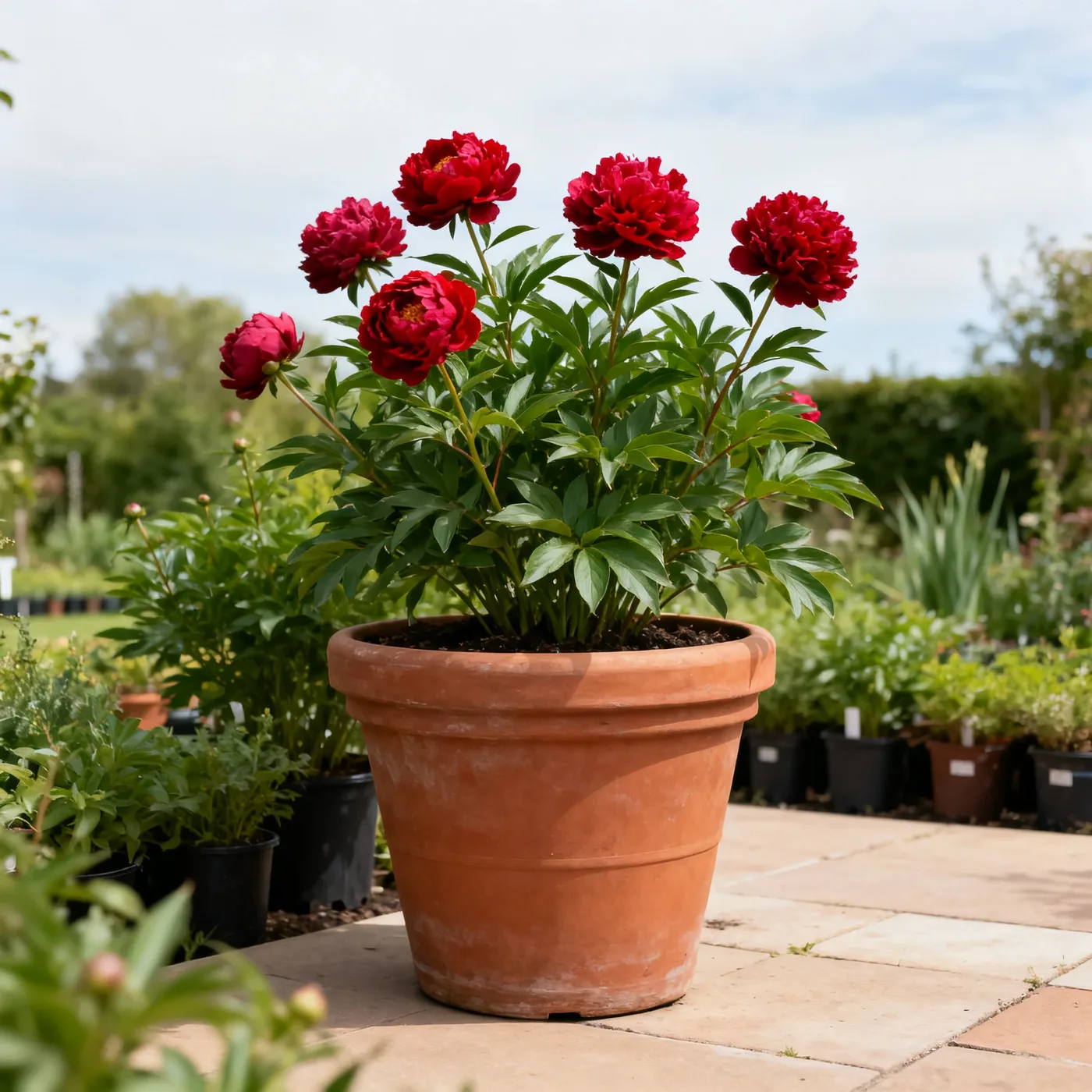
Open a few catalogs and you will find the same plant sold as red, deep pink, hot pink and magenta. A buyer who expects a true fire-engine red, or a soft garden pink, can be caught off guard when the first flower opens, and that is a poor start for a plant you mean to keep for decades.
In this article, we'll go through why the labels differ, how photographs and screens bend the color, how bud, light and age shift it, and which companions make it glow.
Kansas Peony Red, and the Pink Labels Beside It
Start with the plain description. Kansas is double, bright clear red, containing almost no blue, and it fades very little, if any. That is why we call Kansas a red and not a pink, whatever a particular listing says.
Why Sellers Reach for Pink
A flower this saturated is hard to describe in one line of catalog copy. "Red" suggests a plain scarlet, so a seller who sees a cooler, more intense color reaches for "deep pink," "hot pink" or "fuchsia" to convey the punch. Plenty of listings also copy one another. Even descriptions of the flower differ, and some call it fully double and rose pink.
None of those labels is invented out of nothing. They are all describing the same bloom under different light, on different screens, at different stages of opening.
The Name We Use
What we tell customers is to picture a clean, saturated red that sits on the cool side of the color wheel. In some light that cool side shows as magenta. The "almost no blue" also tells you what Kansas will never be: it will not read as lavender, bubblegum or the soft blush of a pale peony.
One of the most common questions we get is whether a pink label means we sent the wrong plant. We didn't, and the rest of this guide shows why. If your other red peony is Karl Rosenfield, our Kansas Peony vs Karl Rosenfield comparison covers how to tell the two apart.
Catalog Photo Against the Bloom in Your Hand
Saturated red is the color cameras and screens handle worst. A sensor will often push a red this strong toward pink or magenta, and a phone that brightens and sharpens the picture can clip the reds entirely. Clipping flattens the shading between petals, so a layered double turns into a single flat disk of color that looks nothing like the ruffled flower in the garden.
What Light and Screens Do to Red
White balance matters just as much. A photo taken under cloud cools everything and tends to read fuchsia, while one shot in warm late light drifts toward scarlet. Then your own monitor, set to its own brightness and tint, takes another turn at it. By the time the image reaches you, it has been reinterpreted at least three times.
That is why two honest sellers can photograph the same Kansas on the same morning and post pictures that look like different plants. Treat any single catalog photo as a mood, not a paint swatch.
How to Judge Before You Order
Look at several photos from different sources, preferably ones taken in a garden and not on a studio backdrop, and ignore the outliers at either end. Then weigh them against the true color: a bright clear red with almost no blue. If the photos you trust cluster around saturated red with a cool edge, you have the right picture.
Our buying guide for Kansas Peony covers what to check on the plant itself. For color, the best test is still the first flower, and with a peony that can take a year or two to arrive, patience is part of the deal.
Tight Bud Color Against Fully Open Petals
Kansas flowers from late spring to early summer, and the color changes noticeably over the few days a single bloom takes to open. In tight bud you see only the outside of the folded petals, so the color looks dense, dark and closed. Nothing is showing through, and nothing is catching light from behind. The bud is a deep, solid red.
As the bloom loosens, the double form does the real work. Layer upon layer of petals fold back, and light starts to pass through the thinner ones. The outer ring brightens to a clear, lively red, and the whole flower looks several shades lighter than the bud did two days earlier.
The Magenta Heart
The center of a fully open double sits in its own shade. The petals are packed tightly there and shadow each other, so the middle reads deeper and cooler than the outer ring. In our experience, this is the part of the flower where the magenta cast shows most, and it is the detail that photographs most often exaggerate.
Cutting at the Right Stage
If you cut Kansas for the house, take the stems when the buds have softened and begun to show color, not when they are still hard. Indoors the bloom will open on its own and move through the same sequence from dark bud to bright red to deep heart, only faster. Each plant blooms for about two weeks, so cutting a few stems doesn't cost you the show. Our Kansas Peony bloom time guide covers the timing in more detail.
Morning Sun Against Afternoon Shade on Kansas Peony
Kansas takes full sun or partial shade, so unlike many plants you get to choose the light it lives in, and that choice changes how the color reads. Direct sun makes the red look warmer and clearer. Shade does the opposite, pulling it cooler and deeper because less warm light reaches the petals. The flower is the same either way. The light is doing the editing.
The following table shows what we see across a typical day in the garden.
| Light | How Kansas reads |
|---|---|
| Low morning sun | Warm crimson, glowing where light passes through the petals |
| Overhead midday sun | Bright, clear cherry red, closest to the true color |
| Open shade or a north-facing spot | Deeper and cooler, leaning toward fuchsia |
| Evening shade | Darkest of all, with the magenta undertone at its strongest |
Choosing the Spot for Color
If you want the clear red, give Kansas open light for most of the day. Our guide to Kansas Peony sun requirements covers the plant's needs, but for color alone the rule is simple: morning sun and an open sky keep the red honest, while a shaded corner gives you a moodier, more magenta flower.
Neither is wrong. A planting beside a pale wall in afternoon shade can look wonderful as the evening deepens, because the fuchsia edge shows up against the light surface. The dark green, divided foliage also helps in any light, since it gives the red something cool and quiet to sit against.
Fresh Petals Beside Sun-Faded Kansas Peony Blooms
The same bloom can look quite different on its first morning and its fifth. Kansas fades very little, if any, and that matches what we see, but "very little" is not the same as "never." Purdue's horticulture extension notes that sunlight or hot weather can cause the flowers to fade somewhat, though it would not call that a complete color change.
In our rows, an old bloom hanging on in hot sun gets soft at the edges long before it looks pale overall. The outer petals lose some depth first, the center holds, and you end up with a flower that looks slightly two-toned rather than washed out.
What Rain and Heat Do
A wet double bloom looks darker, almost wine colored, because the water-darkened petals reflect less light. Heavy rain also weighs the flower down, and a bowed head shows more of the shadowed back and center, which pushes the color cooler still. Once the petals dry, most of it returns. If a storm batters the flower so that petals tear or brown, that is damage, not fading.
Flecks, Streaks and Spent Flowers
Pale or dark specks on otherwise even red petals are worth a closer look. The Purdue source also notes that flower thrips occasionally feed on peonies, distorting buds and flecking petals with red or white. That is a pest problem and not a sign the variety is changing color. Our pests and diseases guide covers what to do about it.
When a bloom is truly finished, take it off. Remove dead flowers as they fade, which keeps the plant looking as saturated as the fresh flowers beside it.
Partners That Flatter Kansas Peony, Partners That Fight It
A cool-edged red behaves differently from a warm scarlet, and that decides what looks good beside it. Kansas wants neighbors that either quiet the garden around it or echo its coolness. Put it next to the wrong color and the red can look muddy or garish. Put it next to the right one and it glows like a lamp in a hedge.
Companions That Make It Glow
Silver and gray foliage is the easiest answer, because it cools the planting and lets the red do the talking. White flowers sharpen the contrast and make the red look richer, and blue or violet neighbors sit comfortably on the cool side of the wheel. Chartreuse leaves add a lively, fresh counterpoint that lifts the dark green of the peony's foliage.
Companions That Fight It
These are the pairings we steer people away from:
- Bright orange and coral flowers, which pull the red toward magenta and make both colors look slightly off.
- Scarlet or true warm reds, which make Kansas look pinker and cooler than it is.
- Soft pastel pinks, which look washed out and make Kansas read as louder than you intended.
- Yellow-red bicolors, which fight with the cool heart of the flower and create visual noise.
For layout ideas that work with these color rules, see our guide to landscape ideas and companion plants for Kansas Peony.
Kansas Peony Is a Red With a Magenta Heart
If you remember one line, make it this one: Kansas is a clear, saturated red whose cool side shows as magenta in shade, in shadowed centers and in many photographs. The pink and fuchsia labels describe moments in the day or stages of the bloom, not a different plant. Expect a bright double that holds its color well, deepens in shade and softens only a little at the edges as it ages.
Give it open light, a quiet partner or two, and a year or two of patience, and it will repay you every June. On the last evening of the season, a single bloom will still be holding its color a little longer than the light does.
Kansas Peony
Nursery-grown Kansas Peony in sizes from #2, shipped to your door.
From $74.60
Shop Now →Kansas Peony grows on our farms in deep, fertile soil that drains freely, with open sun for most of the day, which is the light that keeps its red clear and its magenta heart bright. We are a small team of growers raising top-quality perennials on land of our own. If you would like to see that color for yourself, choose a Kansas to grow at home.