Protecting Kansas Peony Buds and Blooms From Frost and Rain
"Is my Kansas dead? I went out at dawn with a flashlight after a clear night, and the red shoots are lying over like wet string." It is one of the most common questions we get every April, and the answer is almost always no.
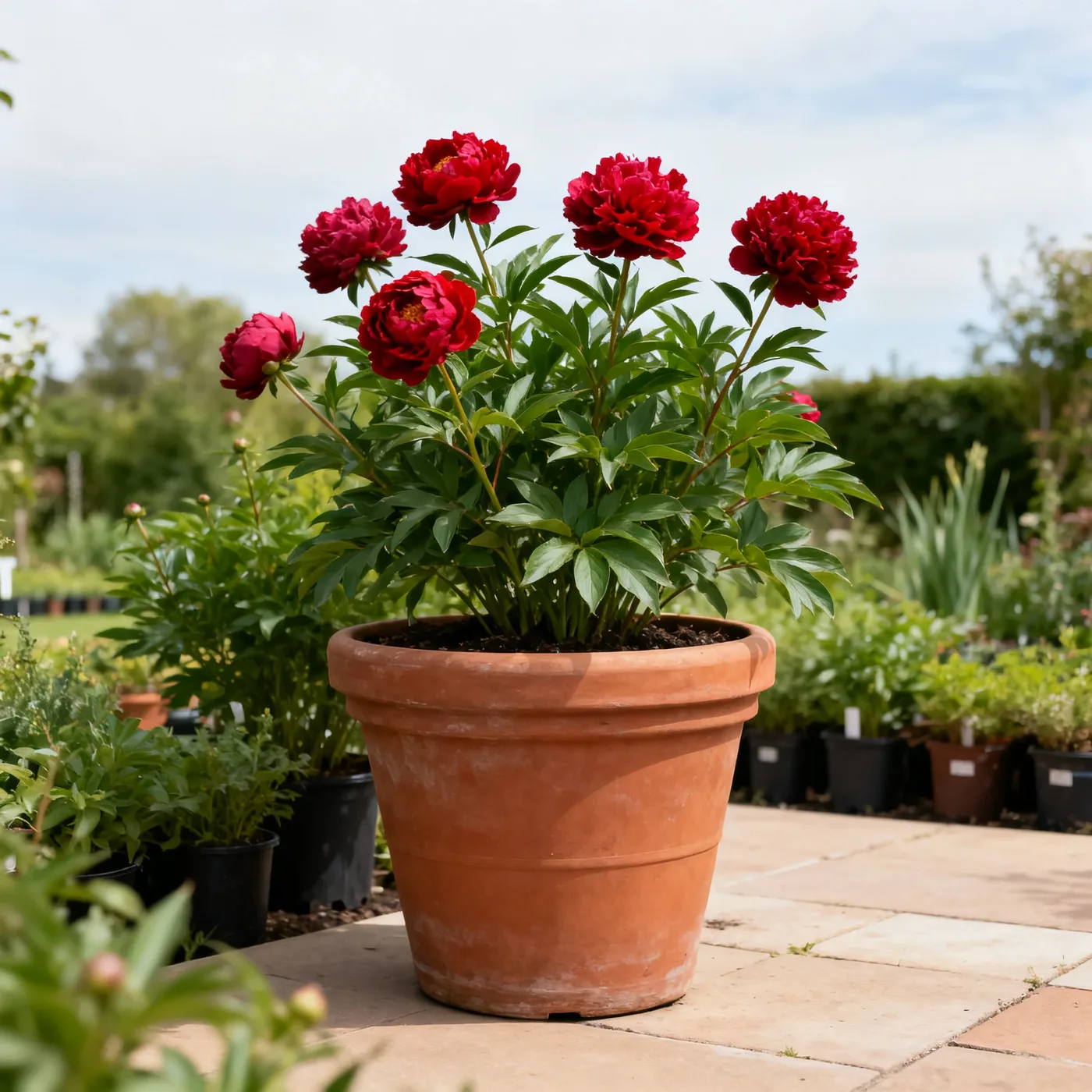
Kansas wakes early. Its deep red shoots are often up before the last frost in zones 3–6, and the fully double flowers it opens later hold rain like a cup. That puts the season's blooms at risk twice, once from cold and once from water, and one bad week can cost you the display you waited years for.
Read on for what freeze damage looks like on shoots and buds, how to tell it from bud blast, how to rescue soaked and flattened doubles, and exactly when to cover and uncover.
Blackened Kansas Peony Shoots After a Hard Freeze
A shoot that lies over, turns dark and feels like wet paper has had the water inside its cells freeze and burst. Kansas is more exposed than most peonies because it breaks dormancy early, and tender red shoots a few inches tall are the first thing a cold snap finds. The reassuring part is that the plants themselves can tolerate a light freeze. The buds, which come later, are what suffer most.
Wait Before You Cut
Common advice says to cut frozen growth off the same morning so the bed looks tidy. We tell customers to wait. Give it several days and the picture sorts itself out: shoots that were only chilled firm up and regain their color, while shoots that were truly killed stay limp or turn brown at the base.
Then cut only the collapsed ones, at the soil line, with clean pruners. A crown carries several growing points, so losing a shoot or two rarely costs you the whole plant. It costs you a little height and a little time.
Watch the Next Cold Night
Freezes often come as a run of cold nights, so the shoots that survived the first one are still in line for the second. Check the forecast each evening while the red tips are showing, and cover before dark as the covering section below explains. How often this happens depends on where you live, and our hardiness zones guide shows how your zone changes the odds.
Kansas Peony Buds Gone Soft and Brown Overnight
Buds that were firm and round yesterday and squeeze like an overripe plum today point to a freeze that arrived after the buds had formed. This is the more painful loss, because shoots recover and buds do not. A hard freeze in May may damage or destroy peony flower buds. It is uncommon, and nothing can be done for that year's flowers.
Timing decides how much you lose. Kansas flowers from late spring to early summer, but its early start means buds can be well along when a late cold night arrives. A mild March followed by a sharp turn is the worst pattern. Our bloom time guide covers when to expect flowers.
Check Every Stem, Not Just the Worst One
Squeeze each bud gently before you decide anything. A stem that lost its large top bud may still carry smaller side buds lower down, tucked under foliage, and those may open a little later than the rest. Mark the stems that still have firm buds so you know where this year's flowers will come from.
Take Off the Dead Buds
Snip soft, brown buds off just above a leaf. Dead tissue left hanging in a damp clump invites fungus, and it makes the next problem harder to read. Put the clippings in the trash instead of the compost pile.
How Frost Nip Differs From Bud Blast on Kansas Peony
Both problems end with a brown bud that never opens, so people mix them up, and the fixes differ. The quickest tell is timing. Frost damage shows the morning after a clear, cold night. Bud blast builds over days of cool, wet weather. Buds infected with botrytis turn brownish black and wither, and the fungus is most common in cool, wet spring weather.
This table lines up what to look at on the bud, the stem and the bed.
| What you check | Frost nip | Bud blast (botrytis) |
|---|---|---|
| When it appears | Overnight, after a cold clear night | Over several days of cool, wet weather |
| Which buds | Many at once, usually on the exposed side of the bed | Scattered, one clump bad and its neighbor fine |
| Bud look | Soft and brown, then dry | Brownish black and withered |
| Stem below | Healthy, and it stays that way | May darken as the problem spreads |
In our rows, frost damage tends to hit a whole strip of plants on the same side at once, while blast skips from one clump to the next. If the whole bed went on the same morning, think cold. If one clump is failing slowly beside healthy ones, think fungus.
If It Is Blast, Clean Up Fast
Extension guidance is to remove withered buds and spent flowers in spring and cut the stalks to ground level in fall. Keep the foliage as dry as you can and give clumps room for air. Our pests and diseases guide covers the fungus in full, so we won't repeat it here.
Petals Shredded or Bowed After a Downpour
Kansas packs a bright red double flower with petal on petal, and every layer catches water. After a hard rain the head fills, gets heavier and nods until the outer petals bruise on the ground. Wind finishes the job by tearing wet petals that cling together. A bloom that is balled up, with its petals stuck in a brown lump, never dried out enough to open.
The stakes are high because each plant blooms for about two weeks. One storm in the middle of that window can take a big share of what you get.
Shake and Drain the Same Day
As soon as the rain stops, tip each wet bloom gently so the water runs out, then give the stem a light shake. Don't pry at stuck petals while they are soaked, because wet red petals bruise at a touch. If the sun comes out, leave the flower alone and let it dry in the air.
Take off ruined blooms whole, down to a leaf. Remove dead flowers as they fade, and brown wet petals lying against healthy leaves do no good.
Cut Ahead of the Storm
If a long soaking rain is forecast and the flowers are about to open, the surest save is to cut them and bring them inside. Our cutting guide covers the stage to cut and how long the stems last in a vase. A bunch of Kansas on the table beats a bed of brown mush.
What to Cover on Kansas Peony and When
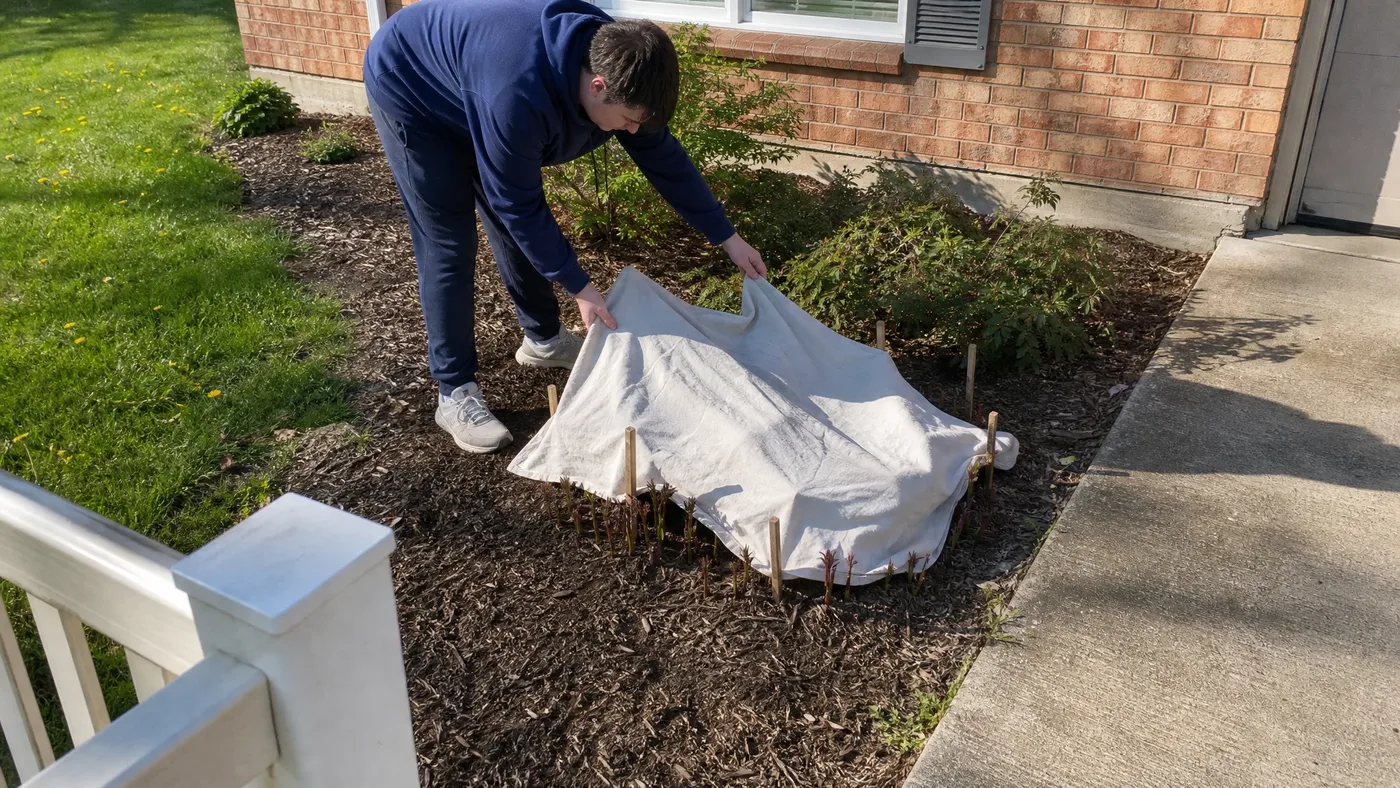
Cover on the evening before a freeze and uncover once the morning warms, and use something that breathes. An old cotton sheet or blanket works, and so does floating row cover. The cloth traps warmth rising from the soil, so it has to reach the ground on all sides to do anything.
Materials That Work and Ones That Don't
Fabric is the best choice because it holds heat without passing cold straight to the leaves. Plastic sheeting works in a pinch only if you hold it off the shoots, since wherever it touches a leaf it carries the cold right through. Overturned buckets will shelter young shoots, but they must come off the same morning or they bake in the sun.
Putting It on and Taking It Off
Follow the same routine every time and it soon becomes a habit. By bud stage you may need taller stakes than you used on the bare shoots.
- Check the forecast in the afternoon and cover before dusk, so the soil's stored warmth stays under the cloth.
- Push three or four stakes in around the clump so the fabric is held off the shoots and buds instead of lying on them.
- Drape the cloth over the stakes and weigh the edges with stones or boards so wind can't lift it.
- Uncover mid-morning once the frost has melted off the cloth and the air has warmed.
- For rain, build a tarp tent over open flowers with the sides left open, so air still moves and the blooms don't stay damp.
Keep covering on every cold night until your last frost date has passed. Your local extension service can give you the average date for your area.
Heavy Doubles Face-Down in the Mud
When a wet double lands in the dirt, the stem has usually bent at its weak point and not snapped. Extension guidance points out that double peony flowers carry so many petals they are too heavy for their stems, and that describes Kansas exactly. It does best in a sheltered position and may need staking, so a windy corner is asking for trouble.
Lift Stems While They Are Draining
Wait until the worst of the rain has passed, then lift each flattened stem back toward the center of the clump. Gather the stems loosely with soft twine or cloth strips, snug enough to hold but loose enough that nothing is crushed. Tying wet stems tightly cuts into them, and bent ones that look intact can kink further.
Save What You Can
A stem that is creased or half broken will not recover, so cut it and finish the bloom in a vase. Mud-splashed petals can be rinsed gently with clean water, or left until they dry and brushed off with a soft hand. A layer of clean mulch around the clump, kept back from the shoots, cuts down on soil splash next time.
Kansas Peony Recovers Better Than It Looks
A frozen shoot, a lost round of buds or a flattened clump looks worse than it is, because the plant's strength sits underground in its crown and roots. The part you see is replaced every year anyway. Kansas is a clump-forming perennial with dark green, divided foliage, and healthy leaves usually keep coming from the shoots that survived.
What to Cut and When
Cut only what is clearly dead. Take away collapsed shoots at the soil line, remove spent flowers as they fade, and cut the whole plant back when the foliage dies down in fall. Our pruning guide walks through the full routine.
How to Judge the Season
Count firm buds after the last cold snap, not the morning after the first one. If a freeze took them, that is a bad year for flowers and not a sign the plant is failing, and extension advice is simply that next year's weather will hopefully be kinder. Resist digging, moving or dividing a plant because of one rough spring. It will bloom again.
An Old Sheet, a Few Stakes and the Season Ahead
The main points are short. Kansas shoots can take a light freeze, the buds are the weak point, and timing and pattern tell frost from bud blast. Shake out wet doubles the same day, cut flowers ahead of a long rain, and lift flattened stems while they are draining.
Keep an old sheet and a few stakes by the back door from April on. That small habit is what saves most of the red doubles you waited for.
Kansas Peony
Nursery-grown Kansas Peony in sizes from #2, shipped to your door.
From $74.60
Shop Now →Our Kansas peonies grow on our farms in humus-rich soil that drains well, with sun for much of the day. Before a plant leaves us, we check that the crown is firm and the eyes are plump, and we only ship plants we would set in our own beds. To start a clump worth protecting, browse our Kansas peonies.